
Process / compounds
ERP for Rubber Product Manufacturers
Cure time and hardness decide whether a part is good, and a compound that has passed its maturation window is scrap you paid for.
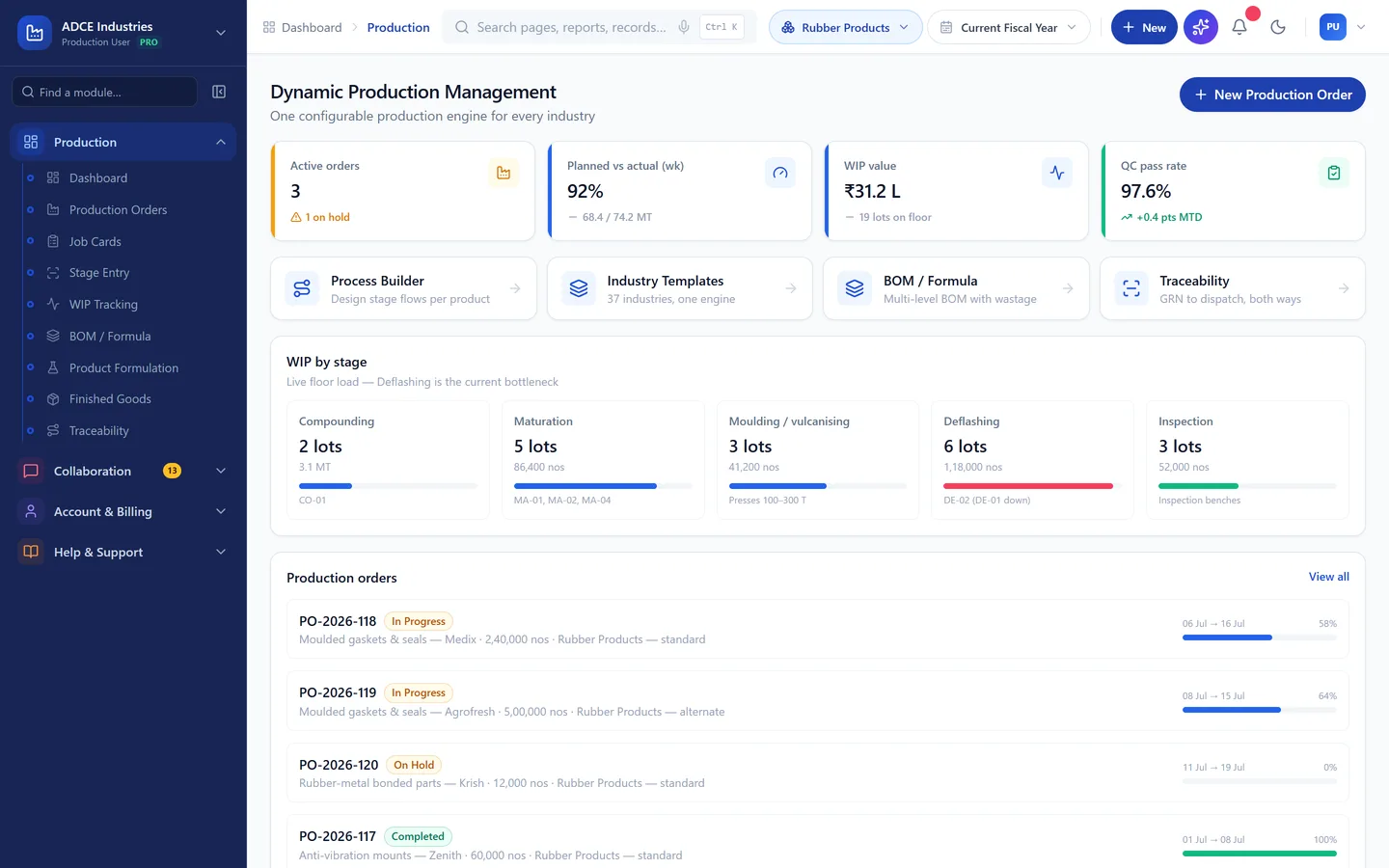
- Stages mapped
- 6
- Quality checks
- 4
- Wastage rules
- 3
- Compliance items
- 3
Your process
The stages, already mapped.
Compounding and moulding with cure control. These are the stages the template ships with — machines and checks included. Yours will differ in detail; that is configuration, not development.
- 1
Compounding
Mix polymer, carbon black and chemicals per recipe
- Machines
- Kneader, mixing mill
- Checked
- Rheometer (t90)
- 2
Maturation
Rest compound to stabilise before use
- Machines
- Storage racks
- Checked
- Shelf-life tag
- 3
Preforming
Cut/extrude blanks to charge weight
- Machines
- Preformer
- Checked
- Blank weight
- 4
Moulding / vulcanising
Compression/injection cure at set temp-time
- Machines
- Presses 100–300 T
- Checked
- Cure card per press
- 5
Deflashing
Cryo/hand deflash to drawing edges
- Machines
- Cryo deflasher
- Checked
- Flash spec
- 6
Inspection
Dimensional and visual per control plan
- Machines
- Inspection benches
- Checked
- Dims, hardness
What goes in
Rubber, carbon black, chemicals
What comes out
Moulded rubber parts
Moulded gaskets & seals · Anti-vibration mounts · Rubber-metal bonded parts
Who is it for
Not all rubber product manufacturers work the same way.
The template is the same; what it has to answer for is not. Find the one that sounds like you — if none of them do, say so on the call and we will tell you honestly whether this is the right fit.
Rubber compound & mixing units
Formula batches, cure records and Mooney testing.
Moulded rubber part makers
Cavity-wise output, flash wastage and mould life.
Retreading & reclaim units
Casing-wise jobs and customer-owned material.
MANUPRIME AI
Ask it about this floor, in your own words.
The AI reads the same records this template creates — so on a rubber product manufacturer floor the questions it can actually answer are the ones you already ask at the morning meeting.
Questions it answers here
- “Why has compound rft moved this week?” — currently 97% in the demo data
- “Why has press utilisation moved this week?” — currently 81% in the demo data
- “Why has flash scrap % moved this week?” — currently 9.2% in the demo data
- “Where is my wastage going?” — flash, cured scrap, costed back to the batch that caused it
- “What am I short of in the next 14 days?” — with the covering purchase order drafted for approval
And what it is not allowed to do
It shows its working, or it does not answer
It drafts. A person releases
It sees only what the person asking can see
Quality
What quality control looks like here.
Checks that hold a dispatch, at the frequency this trade actually inspects.
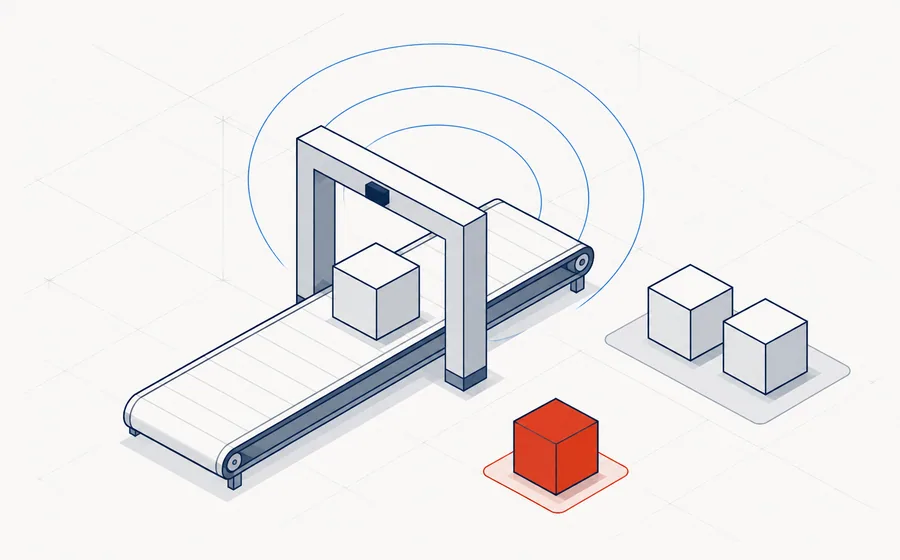
| Parameter | Method | Frequency |
|---|---|---|
| Rheometer cure (t90) | MDR | Every compound batch |
| Hardness (Shore A) | Durometer | Per lot |
| Tensile/elongation | UTM on slabs | Per compound |
| Compression set | Oven method | Per design lot |
Wastage and recovery
The part generic ERPs get wrong.
Most systems can only write material off. In this trade that is the difference between a costing you believe and one you argue with.

Rules that ship with this template
- Flash weighed — cure scrap not reusable
- Compound past shelf-life quarantined
- Bonded-part metal rejects recovered
What drives your cost per unit
- Compound cost per kg by recipe
- Press-hour with cavity count
- Cure time as capacity driver
In short:Flash, cured scrap.
Compliance
What this trade has to prove.
Configured, not bolted on afterwards — the records come out of the same transactions your floor is already entering.
On the dashboard
The numbers this plant is judged on.
Sample figures from the demo, so you can see the shape of what you would be looking at every morning.
- Compound RFT
- 97%
- Press utilisation
- 81%
- Flash scrap %
- 9.2%
Illustrative values from the demo dataset, not a customer's figures.
Questions
Questions we get asked first.
Does it track compound maturation windows?
Yes. Compound is an intermediate with a shelf life; picking warns when a batch is near its window and blocks it past.
How are cure parameters controlled?
Cure time, temperature and pressure sit on the routing per mould, and deviations are recorded against the lot rather than left to the operator.
Is flash recovered?
Flash and cured scrap are recorded as their own wastage reasons at the deflashing stage, so mould-level scrap rates are comparable.
See it running with Rubber Products data.
The demo opens with this trade's materials, machines, checks and reports already in place. No signup, nothing to install.