
Batch / formula
ERP for Chemical Manufacturers
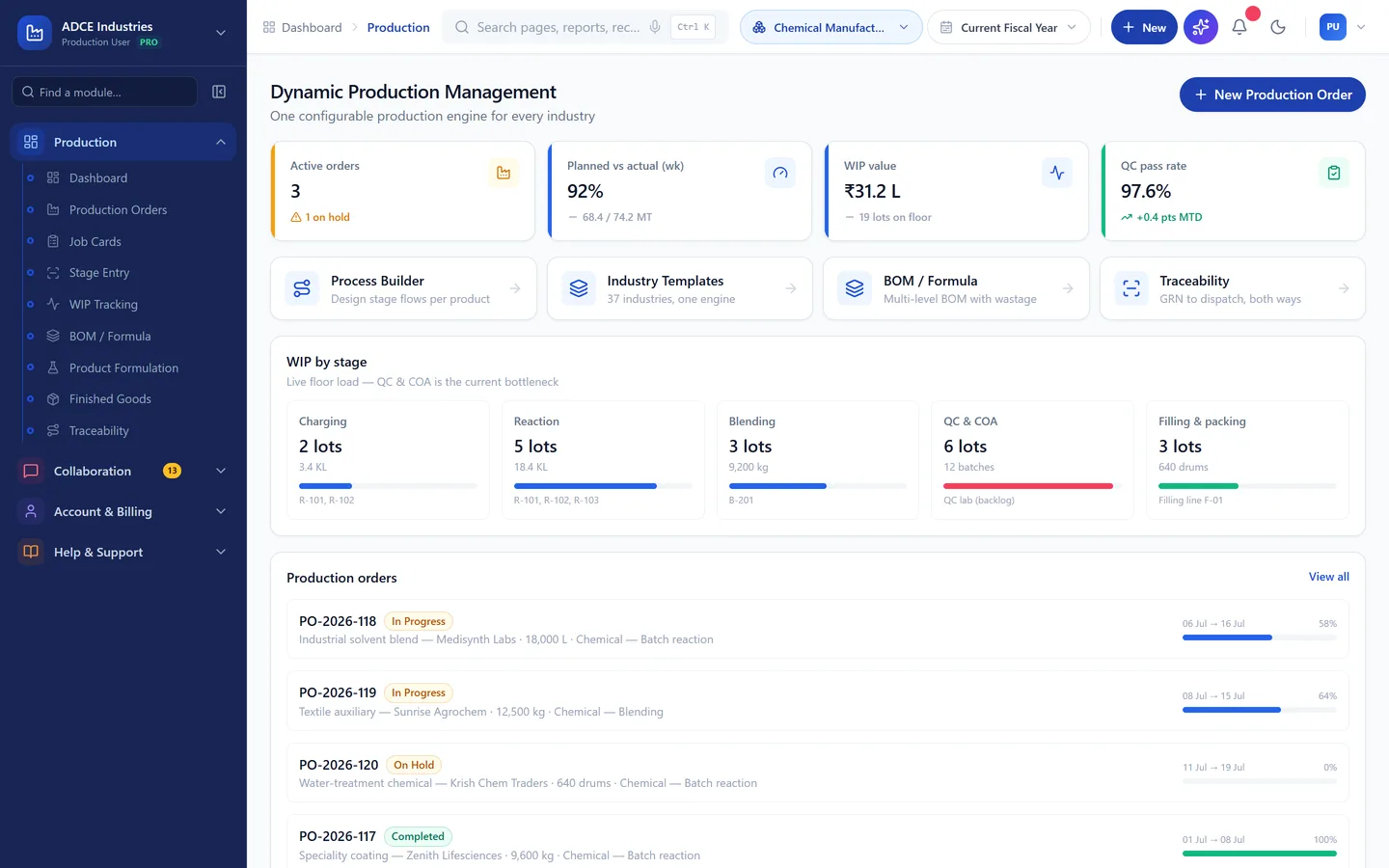
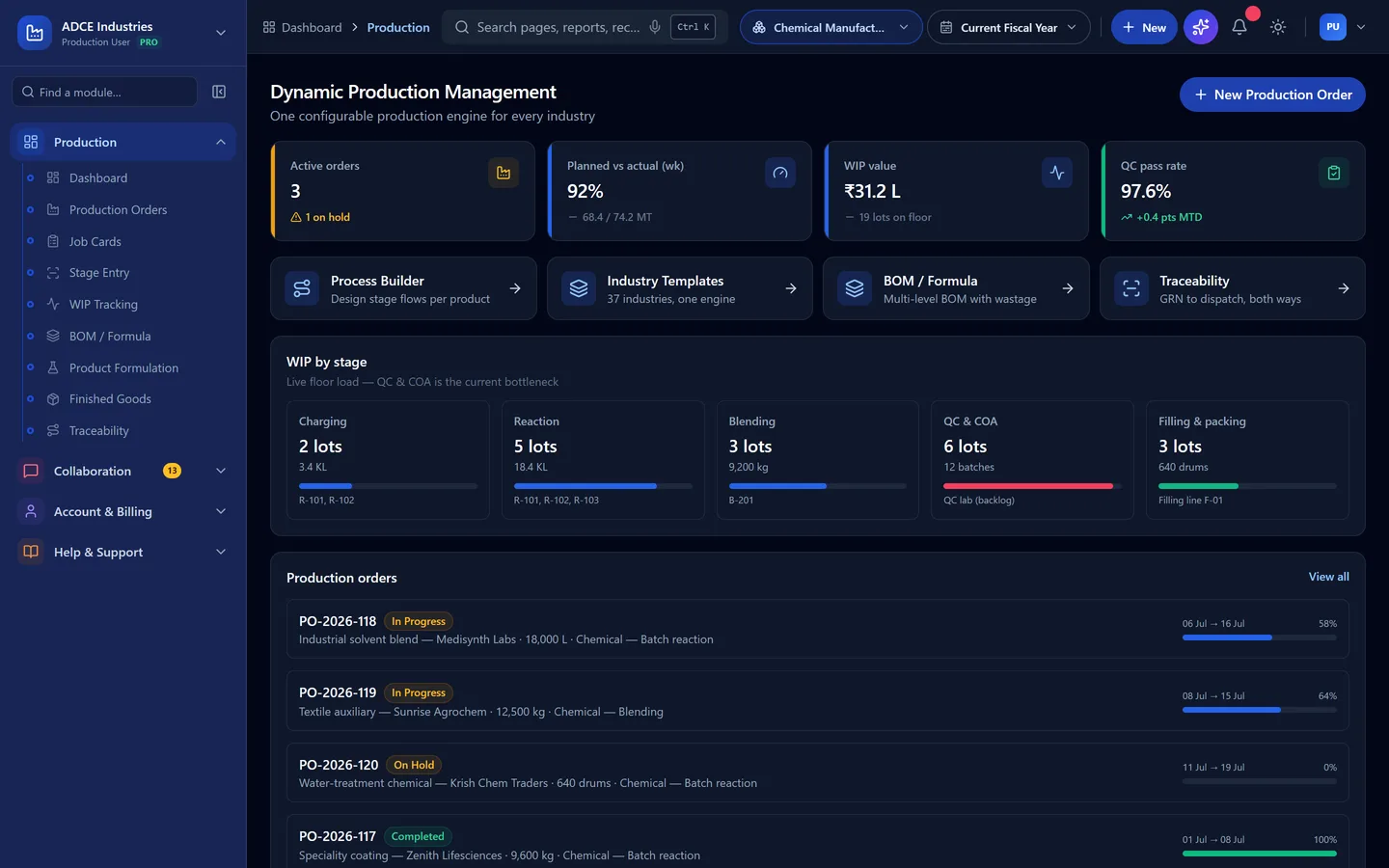
Yield moves with every batch, off-spec material is worth money if you can find a home for it, and the customer wants a COA before the drum leaves. A generic ERP treats all three as exceptions.
- Stages mapped
- 6
- Quality checks
- 4
- Wastage rules
- 3
- Compliance items
- 3
Your process
The stages, already mapped.
Reaction, blending and filling with batch-wise QC. These are the stages the template ships with — machines and checks included. Yours will differ in detail; that is configuration, not development.
- 1
Raw material QC
Verify purity and moisture of incoming solvents and powders before release to store
- Machines
- Lab — titration, GC
- Checked
- COA vs spec, purity %
- 2
Charging
Weigh and charge raw materials per batch recipe with operator double-check
- Machines
- Reactor R-101, load cells
- Checked
- Charge weights vs recipe
- 3
Reaction
Controlled reaction at set temperature/pressure with time-based sampling
- Machines
- Jacketed reactor, chiller
- Checked
- Temp/pressure log, sample pH
- 4
Blending
Adjust concentration and additives to final specification
- Machines
- Blender B-201
- Checked
- Density, viscosity
- 5
QC & COA
Full lab analysis of the finished batch and COA generation
- Machines
- QC lab
- Checked
- Purity, pH, density vs spec
- 6
Filling & packing
Fill drums/carboys with batch and hazard labelling
- Machines
- Filling line F-01
- Checked
- Net weight, label check
What goes in
Solvents, acids, additives (batch + expiry)
What comes out
Bulk chemical, packed drums
Industrial solvents · Textile auxiliaries · Water-treatment chemicals · Speciality coatings
Who is it for
Not all chemical manufacturers work the same way.
The template is the same; what it has to answer for is not. Find the one that sounds like you — if none of them do, say so on the call and we will tell you honestly whether this is the right fit.
Bulk & commodity chemical plants
Formula batches, yield variance and reactor-wise costing.
Specialty & fine chemical units
Small batches, tight specs, certificate of analysis per lot.
Agrochemical & fertiliser blenders
Licence-bound batches and full lot traceability to the dealer.
Traders who also toll-manufacture
Own production and job work under one set of books.
MANUPRIME AI
Ask it about this floor, in your own words.
The AI reads the same records this template creates — so on a chemical manufacturer floor the questions it can actually answer are the ones you already ask at the morning meeting.
Questions it answers here
- “Why has batch right-first-time moved this week?” — currently 94% in the demo data
- “Why has reaction yield moved this week?” — currently 97.2% in the demo data
- “Why has batch cycle time moved this week?” — currently 11.4 hrs in the demo data
- “Where is my wastage going?” — reaction loss %, off-spec rework, costed back to the batch that caused it
- “What am I short of in the next 14 days?” — with the covering purchase order drafted for approval
And what it is not allowed to do
It shows its working, or it does not answer
It drafts. A person releases
It sees only what the person asking can see
Quality
What quality control looks like here.
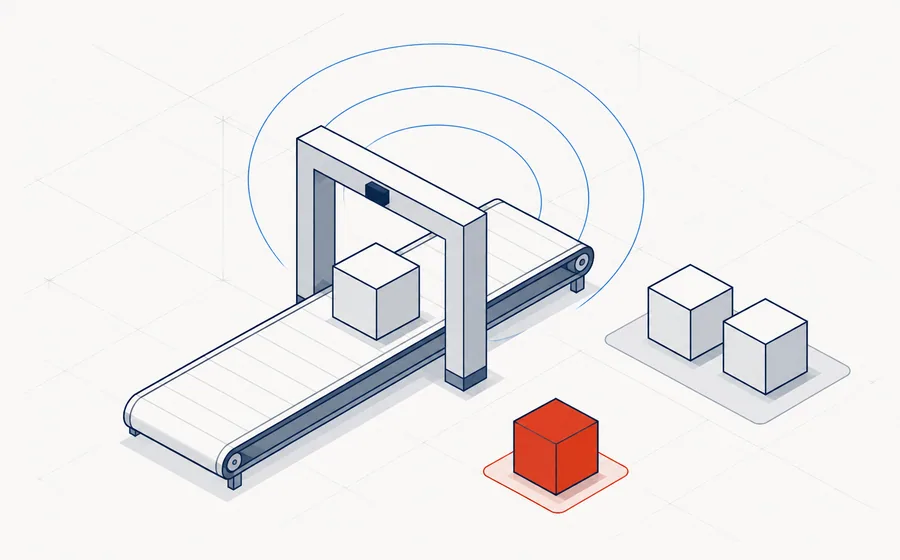
Checks that hold a dispatch, at the frequency this trade actually inspects.
| Parameter | Method | Frequency |
|---|---|---|
| Purity (assay %) | Gas chromatography | Every batch |
| pH | Calibrated pH meter | Reaction + final |
| Density @25°C | Density meter | Every batch |
| Moisture | Karl Fischer | Incoming RM |
Wastage and recovery
The part generic ERPs get wrong.
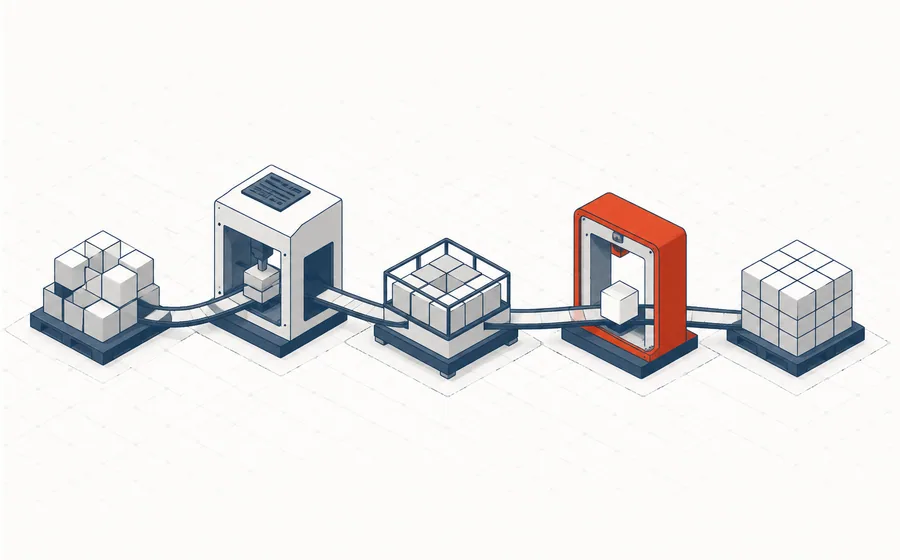
Most systems can only write material off. In this trade that is the difference between a costing you believe and one you argue with.
Rules that ship with this template
- Reaction loss standard 2.5% of charge
- Off-spec batches → rework blend tank (max 10% dosing)
- Washings collected to effluent with quantity log
What drives your cost per unit
- Reactor-hour rate (incl. utilities)
- Batch-wise RM actuals at landed cost
- Effluent treatment cost per KL
In short:Reaction loss %, off-spec rework.
Compliance
What this trade has to prove.
Configured, not bolted on afterwards — the records come out of the same transactions your floor is already entering.
On the dashboard
The numbers this plant is judged on.
Sample figures from the demo, so you can see the shape of what you would be looking at every morning.
- Batch right-first-time
- 94%
- Reaction yield
- 97.2%
- Batch cycle time
- 11.4 hrs
Illustrative values from the demo dataset, not a customer's figures.
Questions
Questions we get asked first.
Can it handle a formula where the yield changes every batch?
Yes. The BOM carries a standard yield and the batch records the actual, so variance shows up per batch rather than as a month-end surprise. Reaction loss is a costed line, not a rounding difference.
Does it issue a certificate of analysis?
The COA is generated from the batch inspection record — the same numbers QC entered, not re-typed. Dispatch is blocked until the batch has passed and the COA exists.
How does it treat off-spec and rework?
Off-spec goes to a held location at its actual cost and can be released into a later batch as a substitute input. The recovered value follows it, so blending down does not quietly disappear from your costing.
See it running with Chemical Manufacturing data.
The demo opens with this trade's materials, machines, checks and reports already in place. No signup, nothing to install.