
Job order / drawing-led
ERP for Engineering & Fabrication Units
Every order arrives as a drawing, and the drawing is the BOM, the routing and the inspection plan at the same time. Force that into a standard product master and you will be maintaining ten thousand of them by next year.
- Stages mapped
- 7
- Quality checks
- 4
- Wastage rules
- 3
- Compliance items
- 3
Your process
The stages, already mapped.
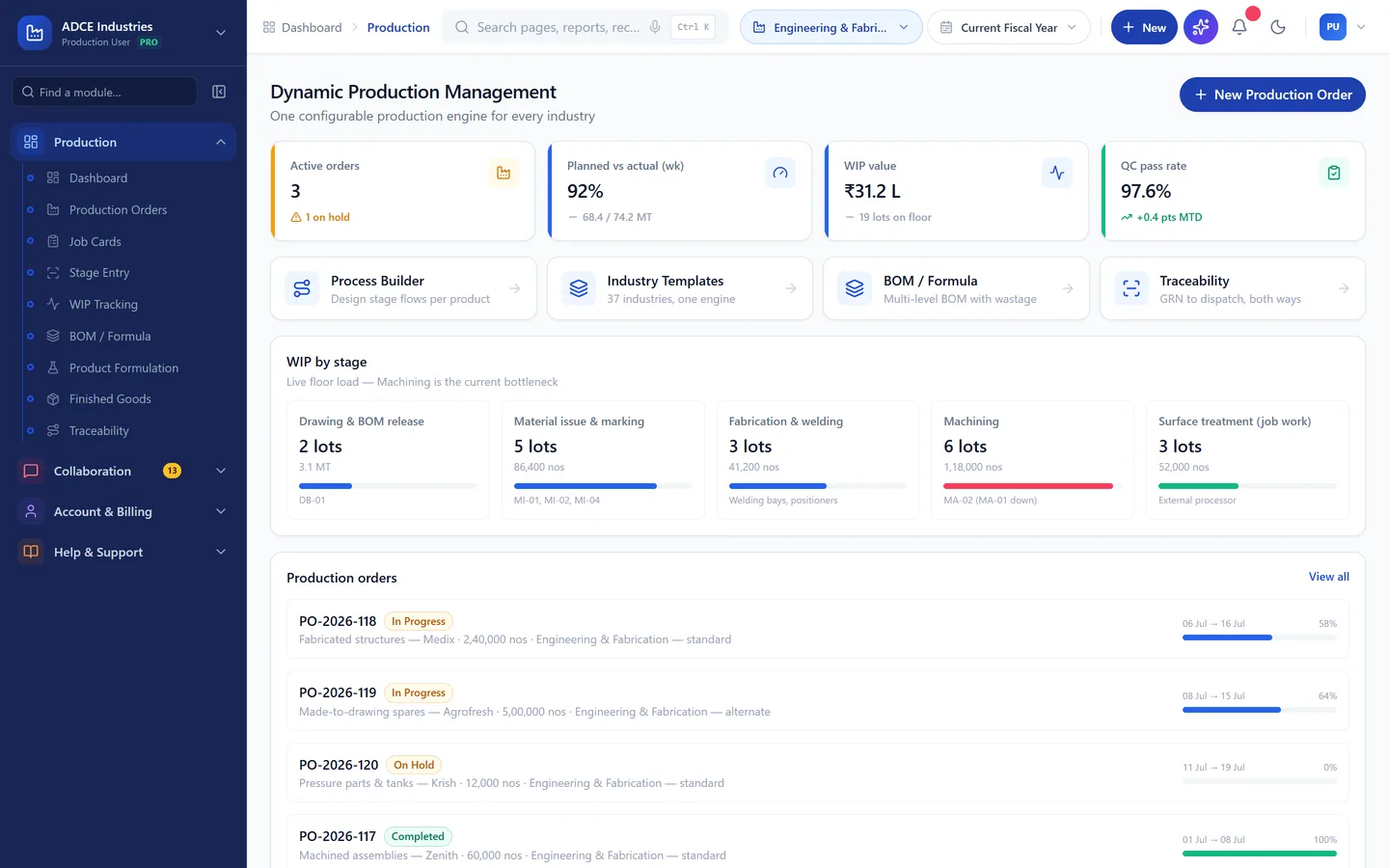
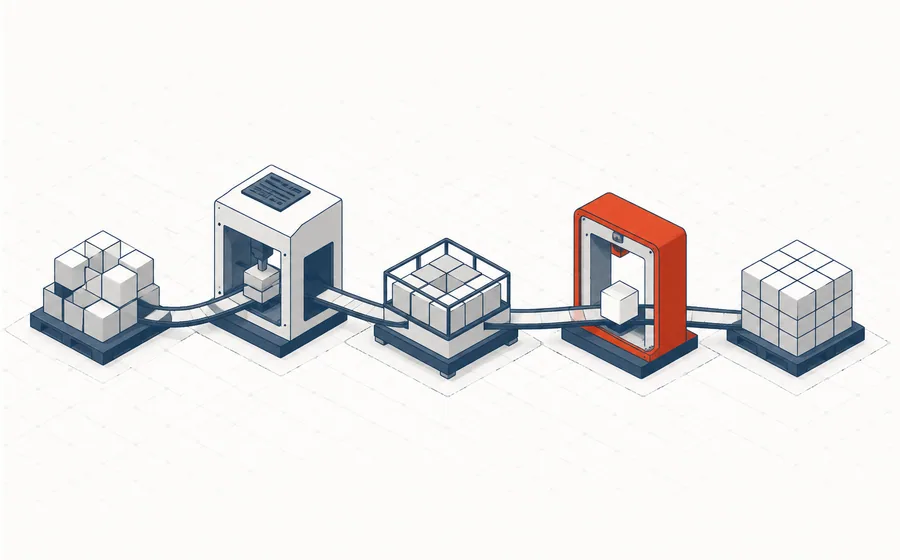
Every order with its own drawing, material and routing. These are the stages the template ships with — machines and checks included. Yours will differ in detail; that is configuration, not development.
- 1
Drawing & BOM release
Release the drawing revision and explode it into a job-specific BOM
- Machines
- Design office
- Checked
- Revision control, BOM vs drawing
- 2
Material issue & marking
Issue plate and sections against the nesting and mark them with the job
- Machines
- Store, marking bay
- Checked
- Heat-number traceability, nesting yield
- 3
Cutting
Cut to the nested layout with the least offcut the layout allows
- Machines
- CNC plasma / gas cutting
- Checked
- Cut size vs nesting, edge quality
- 4
Fabrication & welding
Fit up and weld to the welding procedure specification
- Machines
- Welding bays, positioners
- Checked
- Fit-up gap, WPS compliance
- 5
Machining
Machine interfaces and bores to the drawing tolerance
- Machines
- VMC, horizontal boring machine
- Checked
- Dimensional per drawing
- 6
Surface treatment (job work)
Send out for blasting, galvanising or painting and reconcile the return
- Machines
- External processor
- Checked
- DFT, coating adhesion, weight tally
- 7
Inspection & dispatch
Final inspection and NDT where the drawing calls for it, released with certificates
- Machines
- NDT — UT / DP, CMM
- Checked
- NDT report, dimensional record
What goes in
Plates, sections, bar stock, bought-outs
What comes out
Fabricated assemblies to drawing
Fabricated structures · Machined assemblies · Pressure parts & tanks · Made-to-drawing spares
Who is it for
Not all engineering & fabrication units work the same way.
The template is the same; what it has to answer for is not. Find the one that sounds like you — if none of them do, say so on the call and we will tell you honestly whether this is the right fit.
Fabrication & structural workshops
Drawing-led jobs, weight-based costing, site dispatch.
Machining job shops
Operation-wise routing and machine-hour costing.
Turnkey engineering contractors
Project-wise procurement, milestones and site material.
MANUPRIME AI
Ask it about this floor, in your own words.
The AI reads the same records this template creates — so on a engineering & fabrication unit floor the questions it can actually answer are the ones you already ask at the morning meeting.
Questions it answers here
- “Why has nesting yield moved this week?” — currently 87% in the demo data
- “Why has weld repair rate moved this week?” — currently 2.1% in the demo data
- “Why has on-time to promised date moved this week?” — currently 91% in the demo data
- “Where is my wastage going?” — plate offcuts, weld consumables, machining scrap, costed back to the batch that caused it
- “What am I short of in the next 14 days?” — with the covering purchase order drafted for approval
And what it is not allowed to do
It shows its working, or it does not answer
It drafts. A person releases
It sees only what the person asking can see
Quality
What quality control looks like here.
Checks that hold a dispatch, at the frequency this trade actually inspects.
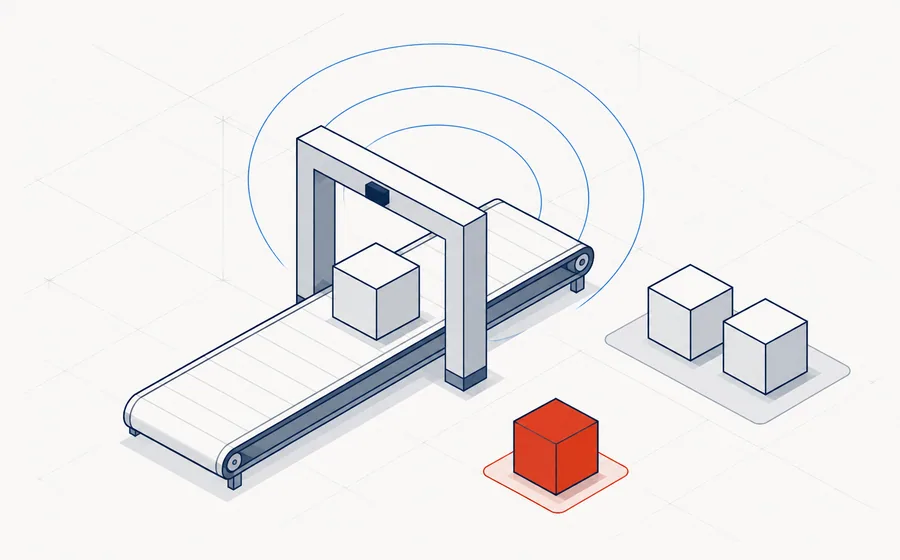
| Parameter | Method | Frequency |
|---|---|---|
| Fit-up | Visual and gauge | Every joint |
| Weld NDT | UT / DP per the drawing | Every critical weld |
| Dimensional | CMM or tape and template | Every assembly |
| Coating DFT | Elcometer | Every treated item |
Wastage and recovery
The part generic ERPs get wrong.
Most systems can only write material off. In this trade that is the difference between a costing you believe and one you argue with.
Rules that ship with this template
- Plate offcut recorded against nesting yield, with reusable offcuts returned to store by size
- Weld consumable consumption tracked per job, not per month
- Rework welds logged against the joint and the welder, so the cost lands where it happened
What drives your cost per unit
- Steel cost per job at actual nested consumption, not drawing weight
- Welder-hour and machine-hour rates against the job card
- Job-work surface treatment charged per item and reconciled on return
In short:Plate offcuts, weld consumables, machining scrap.
Compliance
What this trade has to prove.
Configured, not bolted on afterwards — the records come out of the same transactions your floor is already entering.
On the dashboard
The numbers this plant is judged on.
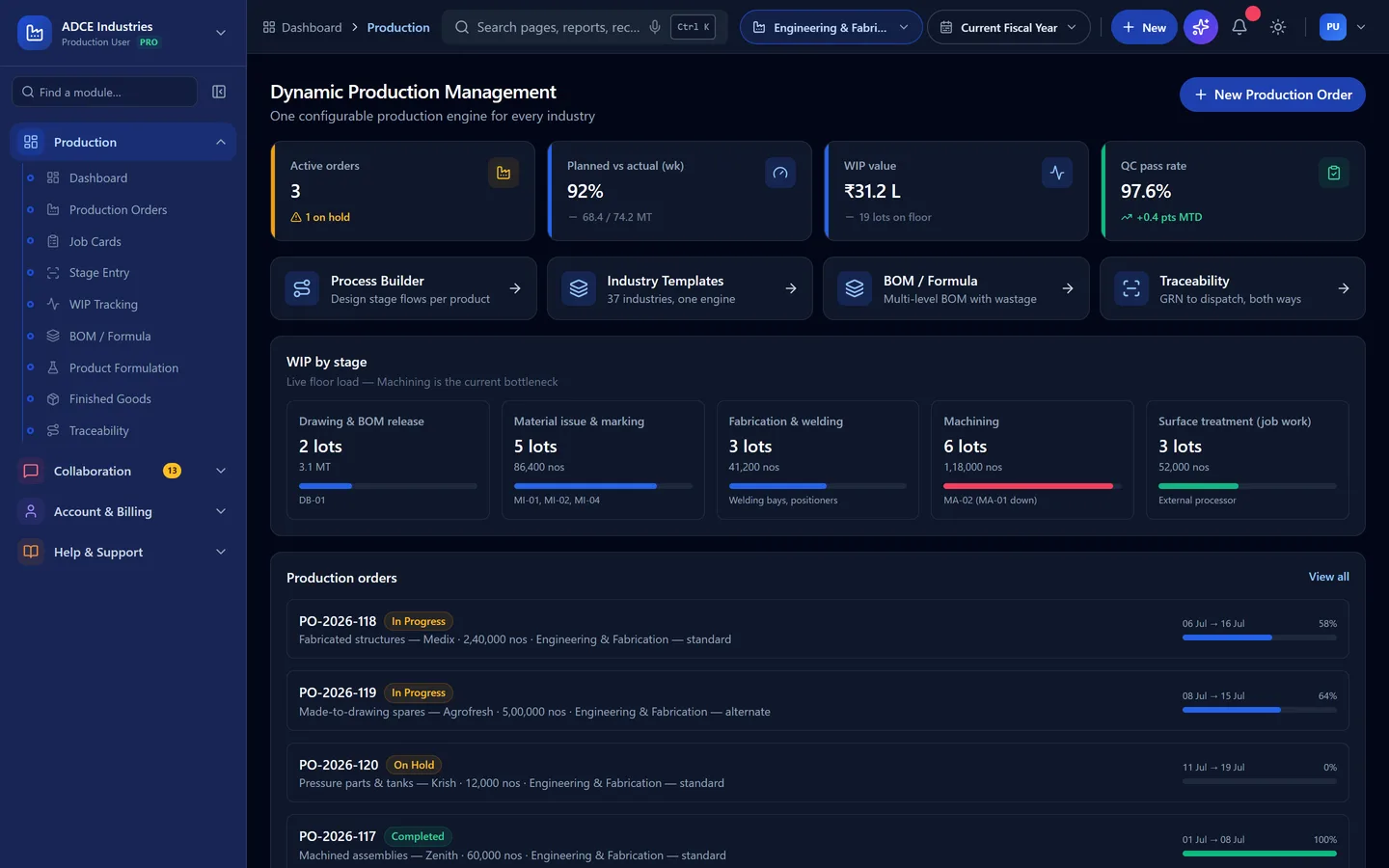
Sample figures from the demo, so you can see the shape of what you would be looking at every morning.
- Nesting yield
- 87%
- Weld repair rate
- 2.1%
- On-time to promised date
- 91%
Illustrative values from the demo dataset, not a customer's figures.
Questions
Questions we get asked first.
Can we work order by order without a product master for everything?
The job carries its own BOM and routing off the drawing revision. Repeat work is copied from the last job rather than forced into a catalogue item that will never be made twice.
Does it track heat numbers through fabrication?
From plate receipt to the finished assembly and onto the test certificate. That is what a client asks for on a pressure part, and it is not something you can reconstruct afterwards.
How does it handle outsourced blasting and galvanising?
As job work against the job — out on a challan, back reconciled by weight and item, with the DFT record attached before dispatch. The outwork charge lands on the job instead of in a monthly expense head.
See it running with Engineering & Fabrication data.
The demo opens with this trade's materials, machines, checks and reports already in place. No signup, nothing to install.