
Batch / formula
ERP for Paint & Coating Manufacturers
A batch is not right because the numbers are right — it is right because the panel matches. Shade approval is a subjective gate with an entirely objective consequence, and most ERPs have nowhere to put it.
- Stages mapped
- 6
- Quality checks
- 4
- Wastage rules
- 3
- Compliance items
- 3
Your process
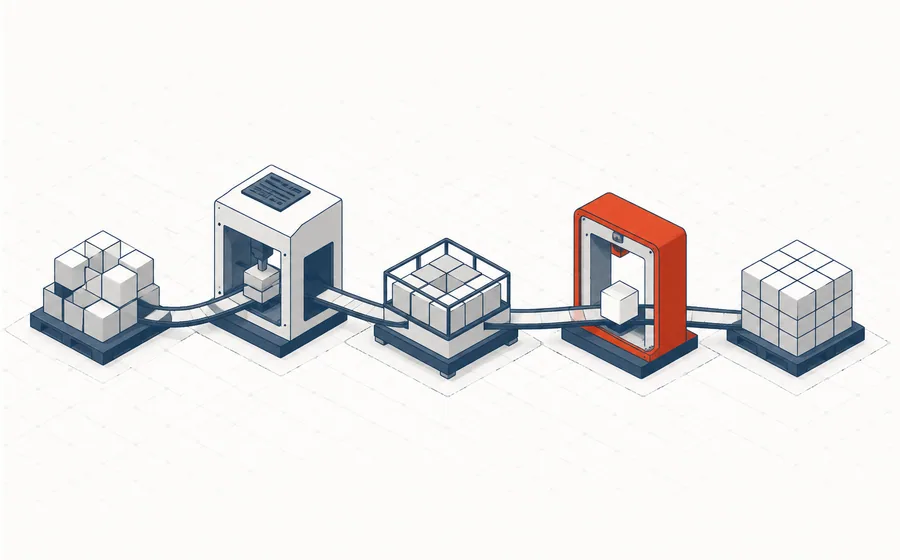
The stages, already mapped.
Dispersion to tinting and filling with shade approval. These are the stages the template ships with — machines and checks included. Yours will differ in detail; that is configuration, not development.
- 1
Dispensing
Weigh resin, pigment and additives against the shade formula
- Machines
- Dispensing bay
- Checked
- Charge weight vs formula
- 2
Dispersion / milling
Disperse pigment down to the target fineness
- Machines
- High-speed disperser, bead mill
- Checked
- Fineness of grind (Hegman)
- 3
Let-down
Add the balance resin and solvent to working viscosity
- Machines
- Let-down vessel 3 KL
- Checked
- Viscosity, solids %
- 4
Shade & viscosity QC
Draw down against the approved panel before the batch is released
- Machines
- QC lab, spectrophotometer
- Checked
- Delta E vs panel, viscosity
- 5
Tinting
Tint to the customer shade against the colour card
- Machines
- Tinting machine
- Checked
- Shade match, tint volume logged
- 6
Filling & labelling
Fill packs carrying the batch and the shade code
- Machines
- Filling line, labeller
- Checked
- Net volume, label and shade code
What goes in
Resins, pigments, solvents, additives
What comes out
Decorative and industrial paint packs
Interior & exterior emulsions · Enamels · Industrial & protective coatings · Tinted-to-order shades
Who is it for
Not all paint & coating manufacturers work the same way.
The template is the same; what it has to answer for is not. Find the one that sounds like you — if none of them do, say so on the call and we will tell you honestly whether this is the right fit.
Decorative paint manufacturers
Formula batches, shade matching and tinting.
Industrial & protective coating units
Spec-bound batches with test certificates per customer.
Resin, thinner & solvent blenders
Blend batches with hazardous-material handling.
MANUPRIME AI
Ask it about this floor, in your own words.
The AI reads the same records this template creates — so on a paint & coating manufacturer floor the questions it can actually answer are the ones you already ask at the morning meeting.
Questions it answers here
- “Why has shade right-first-time moved this week?” — currently 91% in the demo data
- “Why has batch cycle time moved this week?” — currently 6.8 hrs in the demo data
- “Why has mill residue moved this week?” — currently 1.1% in the demo data
- “Where is my wastage going?” — mill residue, tank washing, shade rejects, costed back to the batch that caused it
- “What am I short of in the next 14 days?” — with the covering purchase order drafted for approval
And what it is not allowed to do
It shows its working, or it does not answer
It drafts. A person releases
It sees only what the person asking can see
Quality
What quality control looks like here.
Checks that hold a dispatch, at the frequency this trade actually inspects.
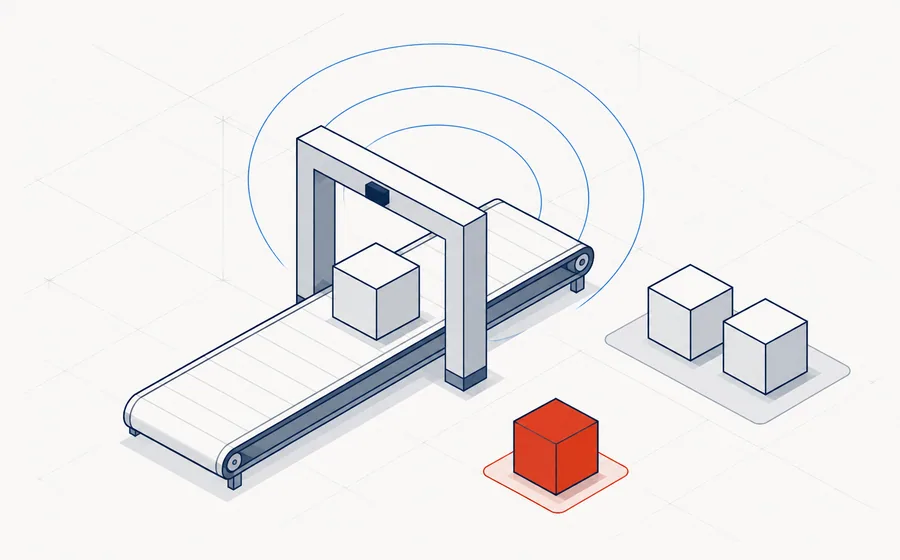
| Parameter | Method | Frequency |
|---|---|---|
| Fineness of grind | Hegman gauge | Every mill batch |
| Viscosity | Krebs / Ford cup | Every batch |
| Shade | Spectrophotometer vs panel | Every batch |
| Drying time | Panel test | Every formula change |
Wastage and recovery
The part generic ERPs get wrong.
Most systems can only write material off. In this trade that is the difference between a costing you believe and one you argue with.
Rules that ship with this template
- Mill residue standard 1.2% of the mill base charge
- Tank washings dosed back only into the same shade family
- Shade-rejected batches corrected by tinting, never by dilution
What drives your cost per unit
- Pigment cost per litre at actual loading
- Mill-hour rate including the changeover flush
- Tinter cost per shade, tracked separately from base cost
In short:Mill residue, tank washing, shade rejects.
Compliance
What this trade has to prove.
Configured, not bolted on afterwards — the records come out of the same transactions your floor is already entering.
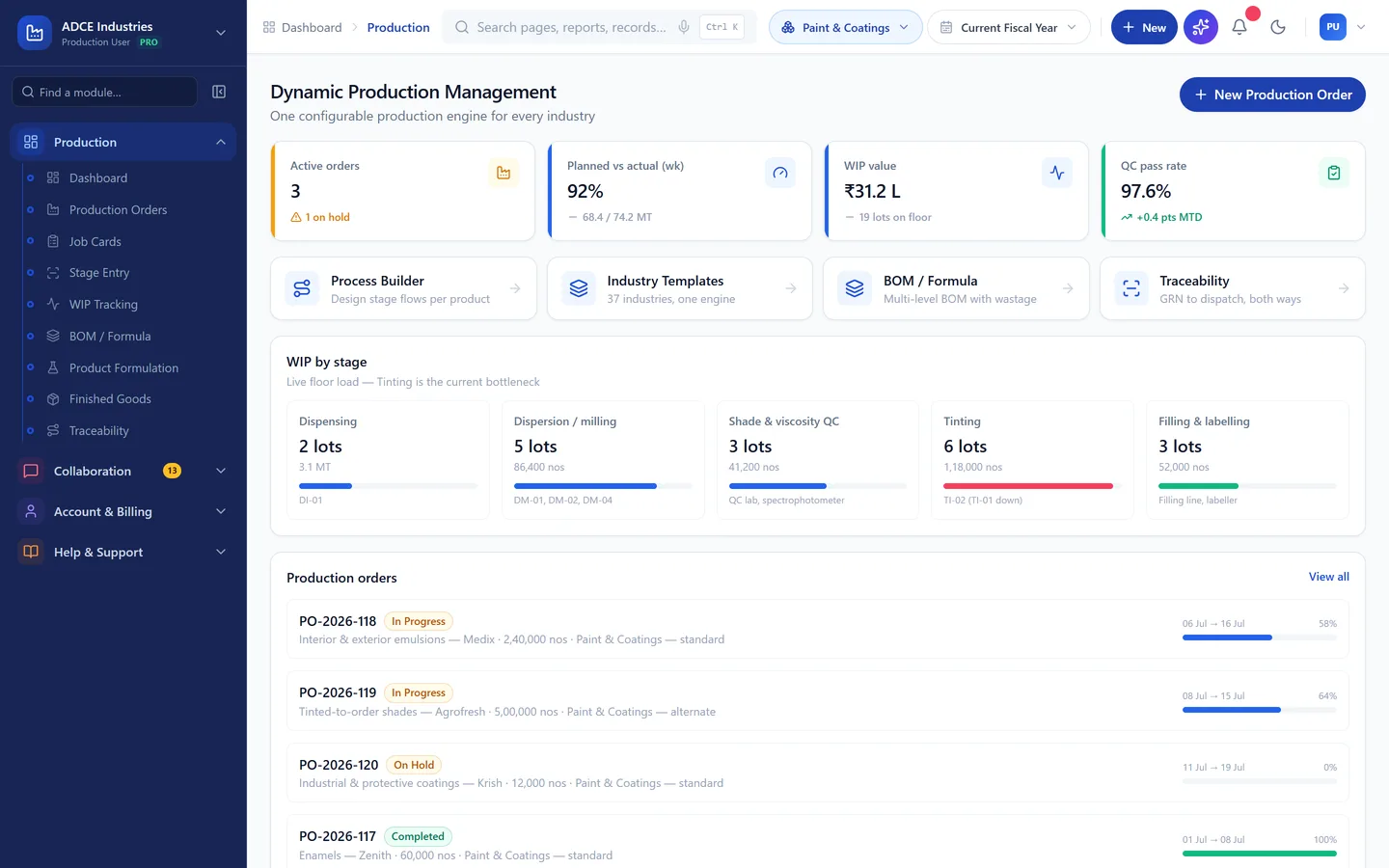
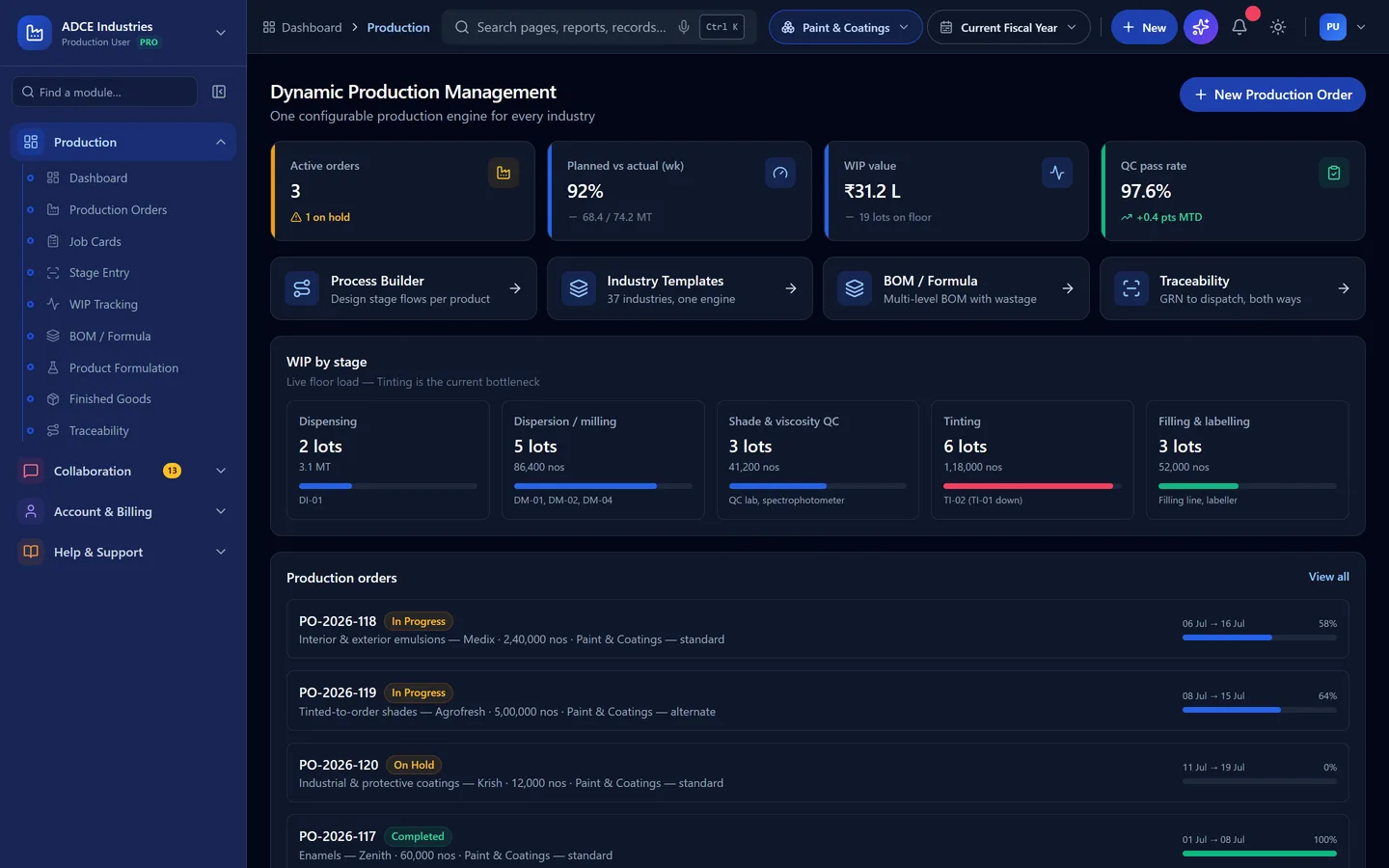
On the dashboard
The numbers this plant is judged on.
Sample figures from the demo, so you can see the shape of what you would be looking at every morning.
- Shade right-first-time
- 91%
- Batch cycle time
- 6.8 hrs
- Mill residue
- 1.1%
Illustrative values from the demo dataset, not a customer's figures.
Questions
Questions we get asked first.
Can the system hold a shade approval against the batch?
The shade check is a QC parameter with a Delta E against the approved panel, recorded per batch, and filling is blocked until it passes. The panel reference travels with the shade code onto the pack.
What happens to a batch that misses shade?
It goes to a held location at its actual cost and can be corrected by tinting, with the correction dosed and recorded. It cannot be quietly diluted into the next batch — a rework is a documented input carrying a value.
Does it handle tinted-to-order?
Base plus tinter is a two-part BOM, so tinter cost lands on the shade rather than being averaged across the base. Dealer tinting comes back against the same shade code.
See it running with Paint & Coatings data.
The demo opens with this trade's materials, machines, checks and reports already in place. No signup, nothing to install.