
Process / converting
ERP for Packaging Manufacturers
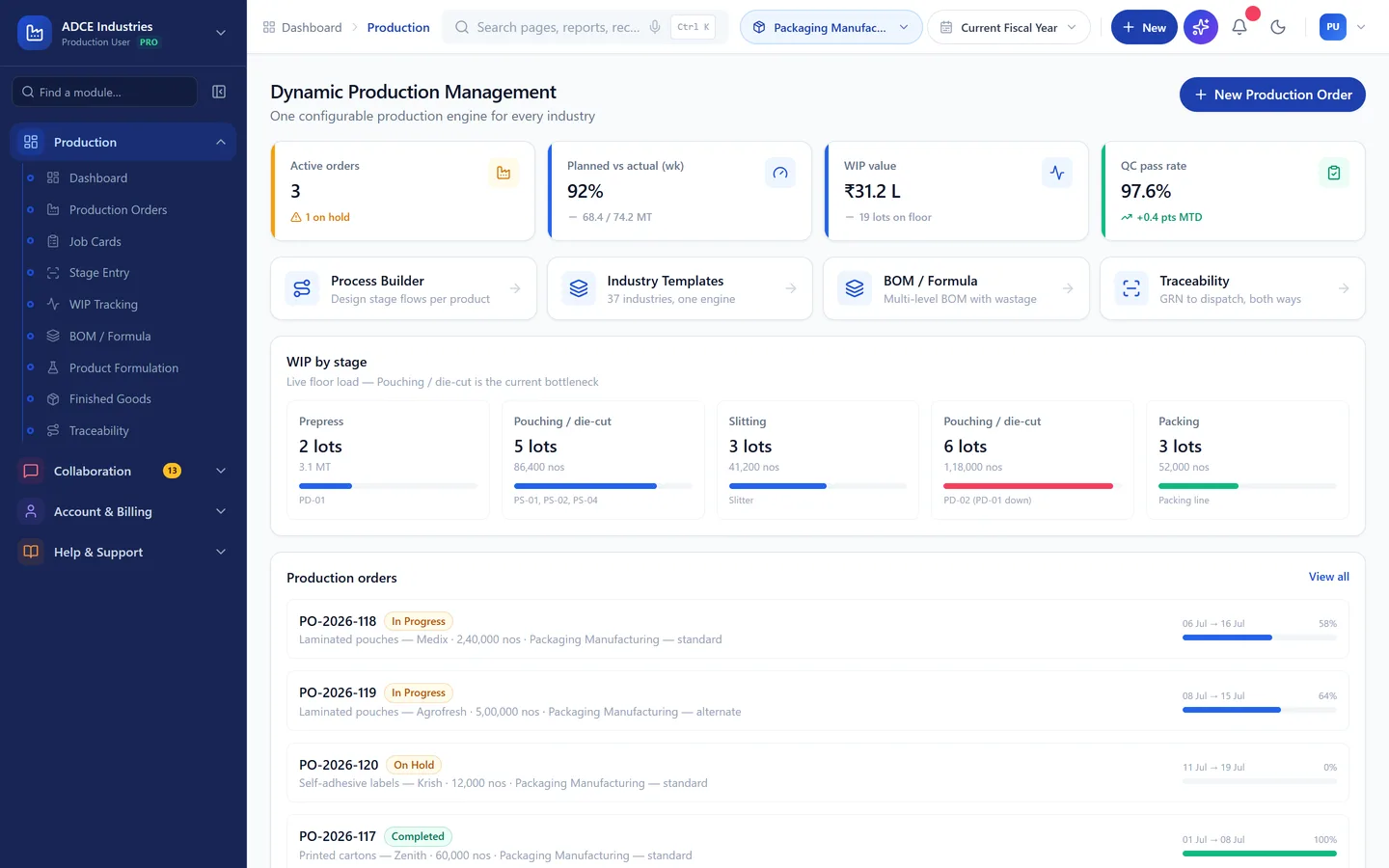
Setup waste is a real cost on every job, reels have to be traceable to the customer they were printed for, and a registration problem found late has already consumed a kilometre of film.
- Stages mapped
- 6
- Quality checks
- 4
- Wastage rules
- 3
- Compliance items
- 3
Your process
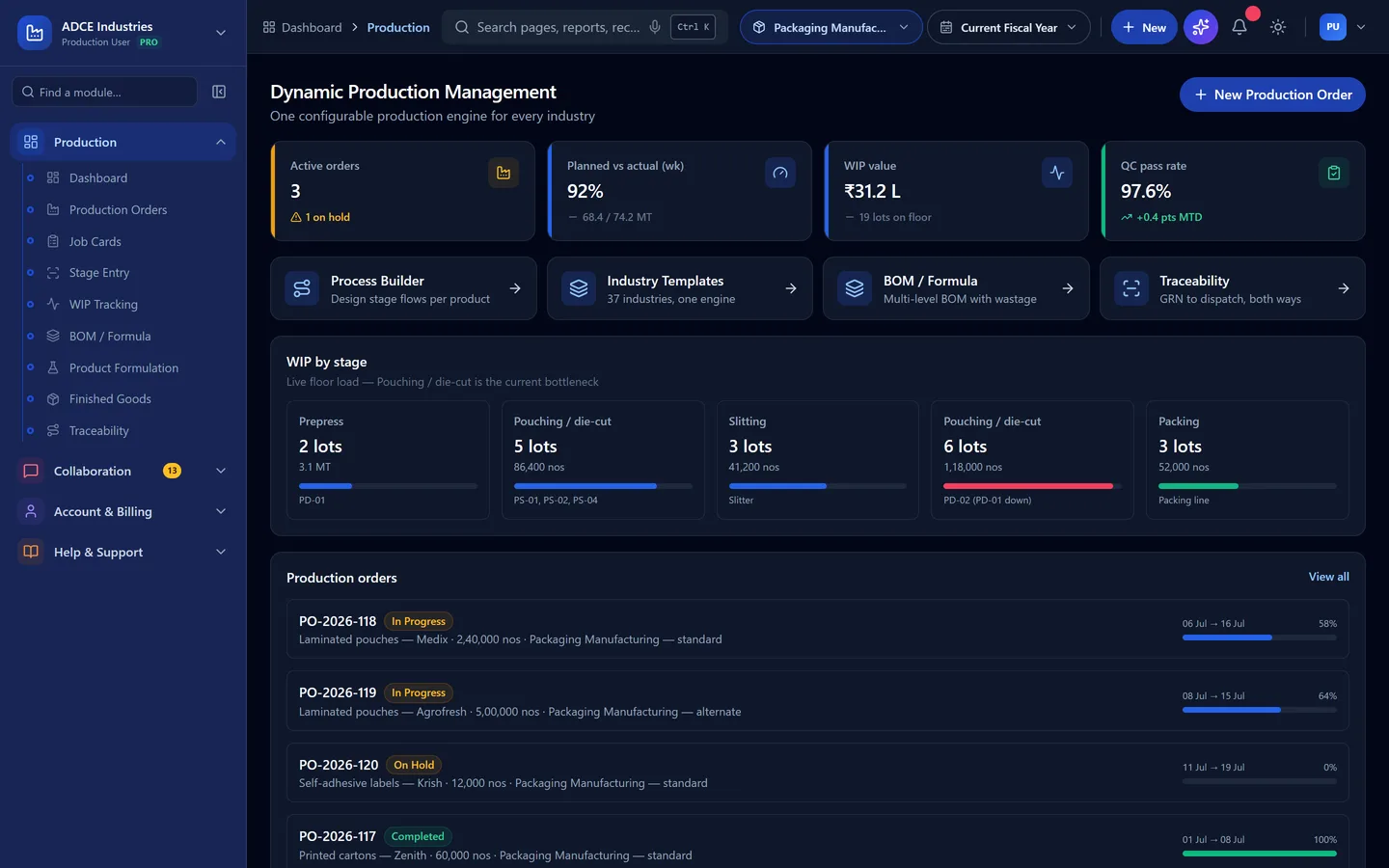
The stages, already mapped.
Printing and converting with reel tracking. These are the stages the template ships with — machines and checks included. Yours will differ in detail; that is configuration, not development.
- 1
Prepress
Artwork, plates/cylinders and colour targets
- Machines
- CTP/engraving
- Checked
- Proof approval
- 2
Printing
Roto/flexo/offset printing with inline registration
- Machines
- Roto 8-colour
- Checked
- ΔE vs standard, registration
- 3
Lamination
Bond film/foil layers with adhesive coating
- Machines
- Laminator
- Checked
- Bond strength, GSM
- 4
Slitting
Slit jumbo rolls to job width with tension control
- Machines
- Slitter
- Checked
- Width, telescoping
- 5
Pouching / die-cut
Convert to pouches or die-cut blanks
- Machines
- Pouching m/c, die-cutter
- Checked
- Seal strength, dims
- 6
Packing
Pack per customer count with roll/carton labels
- Machines
- Packing line
- Checked
- Count, label
What goes in
Films, paper, inks, adhesives
What comes out
Pouches, cartons, labels
Laminated pouches · Printed cartons · Self-adhesive labels
Who is it for
Not all packaging manufacturers work the same way.
The template is the same; what it has to answer for is not. Find the one that sounds like you — if none of them do, say so on the call and we will tell you honestly whether this is the right fit.
Corrugated box plants
Ply, GSM and size-wise conversion with board consumption.
Flexible packaging & lamination units
Reel-to-reel runs, printing cylinders and wastage bands.
Rigid & label converters
Die and plate assets, short runs, high SKU counts.
MANUPRIME AI
Ask it about this floor, in your own words.
The AI reads the same records this template creates — so on a packaging manufacturer floor the questions it can actually answer are the ones you already ask at the morning meeting.
Questions it answers here
- “Why has waste % moved this week?” — currently 6.8% in the demo data
- “Why has press oee moved this week?” — currently 71% in the demo data
- “Why has complaints/million m² moved this week?” — currently 0.8 in the demo data
- “Where is my wastage going?” — setup waste, trim, costed back to the batch that caused it
- “What am I short of in the next 14 days?” — with the covering purchase order drafted for approval
And what it is not allowed to do
It shows its working, or it does not answer
It drafts. A person releases
It sees only what the person asking can see
Quality
What quality control looks like here.
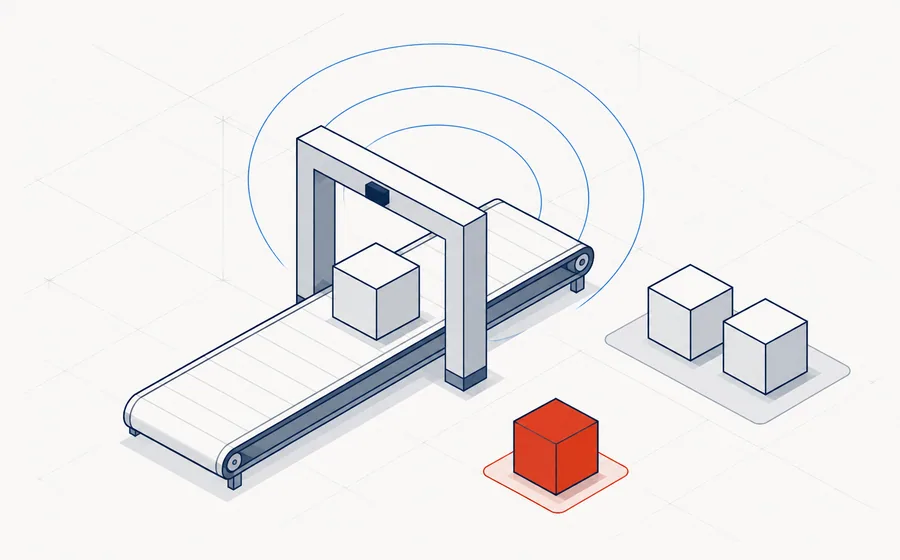
Checks that hold a dispatch, at the frequency this trade actually inspects.
| Parameter | Method | Frequency |
|---|---|---|
| Colour ΔE | Spectro vs approved standard | Per setup + hourly |
| Bond strength | Peel tester | Per lamination lot |
| Seal strength | Tensile tester | Per pouch lot |
| Migration (food) | External lab | Per structure/quarter |
Wastage and recovery
The part generic ERPs get wrong.
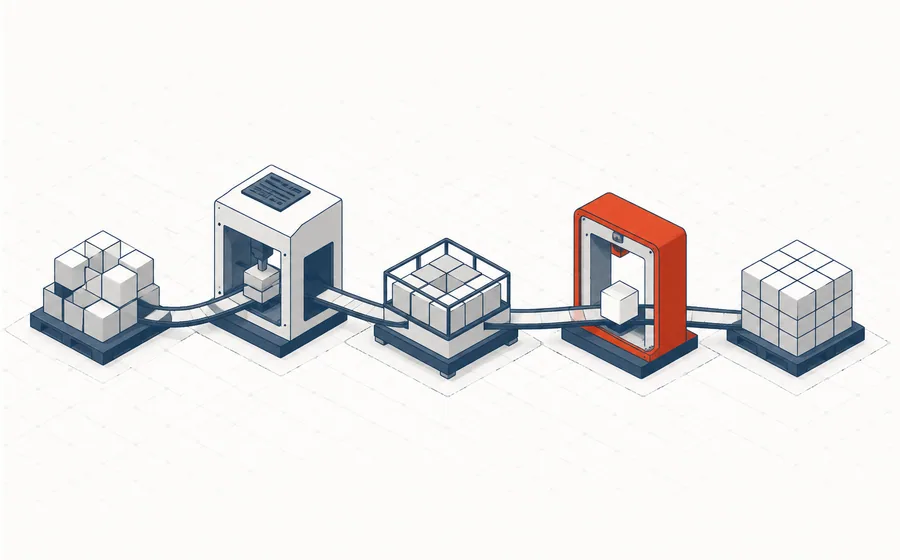
Most systems can only write material off. In this trade that is the difference between a costing you believe and one you argue with.
Rules that ship with this template
- Setup waste standard by job size (min 350 m)
- Trim & matrix waste weighed per shift
- Ink leftovers batched for reuse by shade family
What drives your cost per unit
- Substrate cost per m² by structure
- Press-hour rate + plate/cylinder amortisation
- Waste % vs job length
In short:Setup waste, trim.
Compliance
What this trade has to prove.
Configured, not bolted on afterwards — the records come out of the same transactions your floor is already entering.
On the dashboard
The numbers this plant is judged on.
Sample figures from the demo, so you can see the shape of what you would be looking at every morning.
- Waste %
- 6.8%
- Press OEE
- 71%
- Complaints/million m²
- 0.8
Illustrative values from the demo dataset, not a customer's figures.
Questions
Questions we get asked first.
Is setup waste costed to the job?
Yes, as its own wastage reason on the printing and lamination stages, so short runs carry their true cost instead of being subsidised by long ones.
Can we trace a pouch back to its reel?
Reel genealogy runs from the printed reel through lamination and slitting to the delivered pouches, so a complaint resolves to a specific reel and a specific print run.
Does it handle customer-owned cylinders and plates?
Yes, as customer assets held at your plant, with the job history they have been used on.
See it running with Packaging Manufacturing data.
The demo opens with this trade's materials, machines, checks and reports already in place. No signup, nothing to install.