
Continuous / filling
ERP for Packaged Drinking Water Plants
Hourly QC on TDS, pH and micro is a licence condition, not a preference. The system has to prove the checks happened on the shift they were due.
- Stages mapped
- 5
- Quality checks
- 4
- Wastage rules
- 3
- Compliance items
- 3
Your process
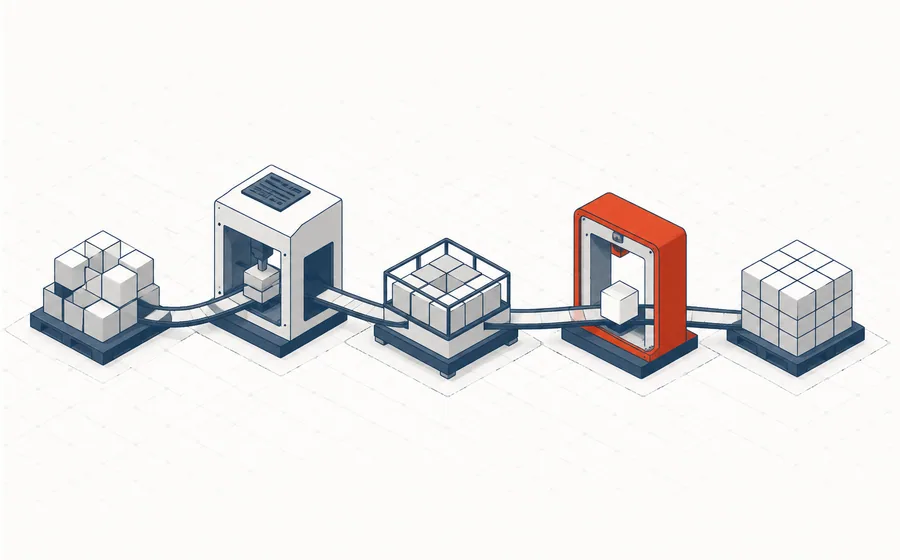
The stages, already mapped.
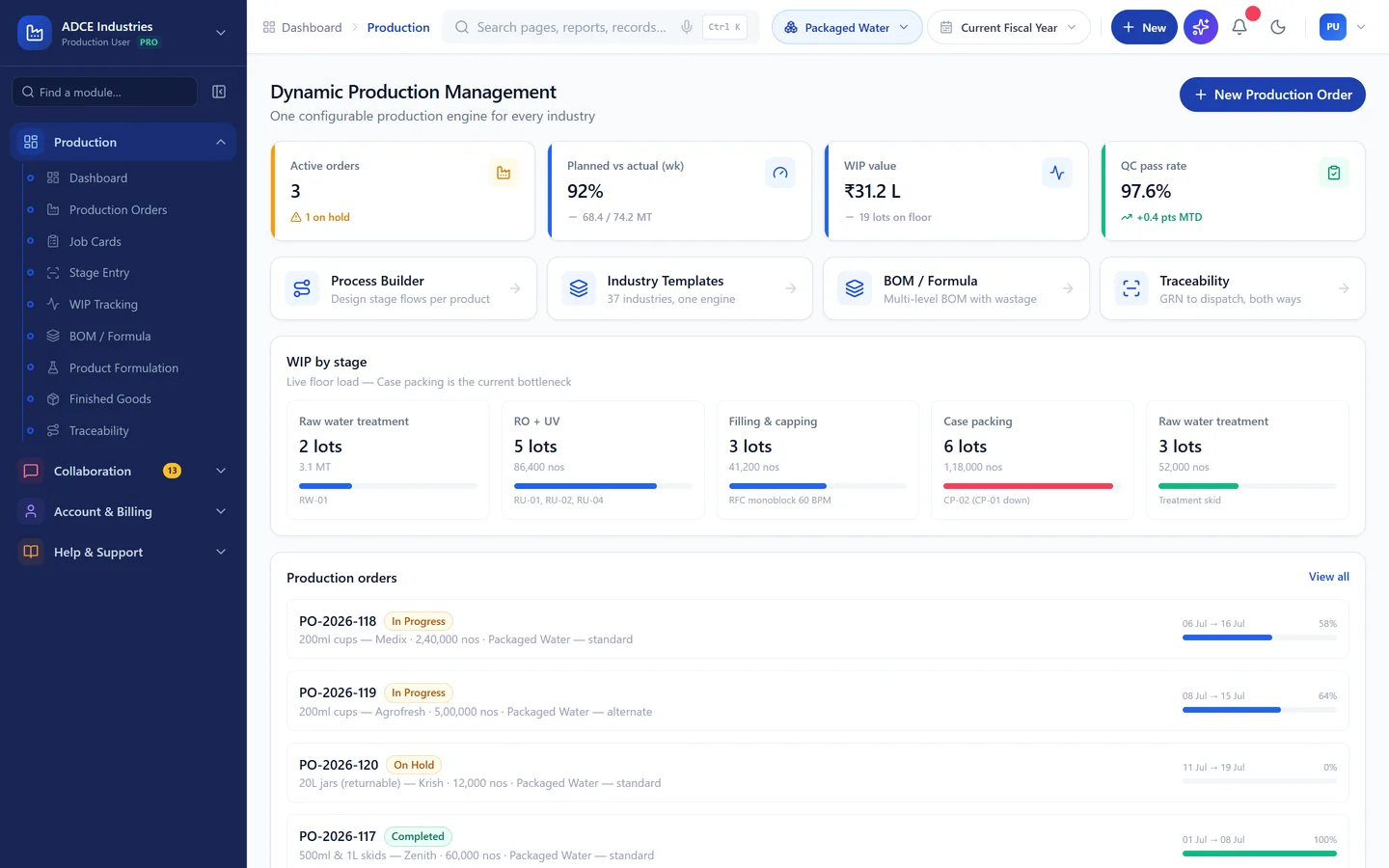
Treatment to case packing with hourly QC. These are the stages the template ships with — machines and checks included. Yours will differ in detail; that is configuration, not development.
- 1
Raw water treatment
Sand/carbon filtration and softening of source water
- Machines
- Treatment skid
- Checked
- Hardness, chlorine
- 2
RO + UV
Reverse osmosis, UV and ozonation to potable spec
- Machines
- RO plant 5000 LPH
- Checked
- TDS, ORP hourly
- 3
Bottle blowing
Blow PET preforms into bottles inline
- Machines
- PET blower
- Checked
- Bottle weight, burst
- 4
Filling & capping
Rinse-fill-cap monoblock under hygienic zone
- Machines
- RFC monoblock 60 BPM
- Checked
- Fill level, torque
- 5
Case packing
Shrink-wrap and date coding, palletise
- Machines
- Shrink tunnel
- Checked
- Code check, pack count
What goes in
Raw water, preforms, caps, labels
What comes out
250ml–20L packs
200ml cups · 500ml & 1L bottles · 20L jars (returnable)
Who is it for
Not all packaged drinking water plants work the same way.
The template is the same; what it has to answer for is not. Find the one that sounds like you — if none of them do, say so on the call and we will tell you honestly whether this is the right fit.
Packaged drinking-water plants
BIS licence records, daily testing and batch-coded lots.
Bulk jar & dispenser operators
Returnable jars tracked as assets, route-wise dispatch.
Mineral & flavoured water bottlers
Formula batches on top of a filling line.
MANUPRIME AI
Ask it about this floor, in your own words.
The AI reads the same records this template creates — so on a packaged drinking water plant floor the questions it can actually answer are the ones you already ask at the morning meeting.
Questions it answers here
- “Why has line efficiency moved this week?” — currently 82% in the demo data
- “Why has water recovery (ro) moved this week?” — currently 68% in the demo data
- “Why has jar return rate moved this week?” — currently 91% in the demo data
- “Where is my wastage going?” — preform rejects, cip water, costed back to the batch that caused it
- “What am I short of in the next 14 days?” — with the covering purchase order drafted for approval
And what it is not allowed to do
It shows its working, or it does not answer
It drafts. A person releases
It sees only what the person asking can see
Quality
What quality control looks like here.
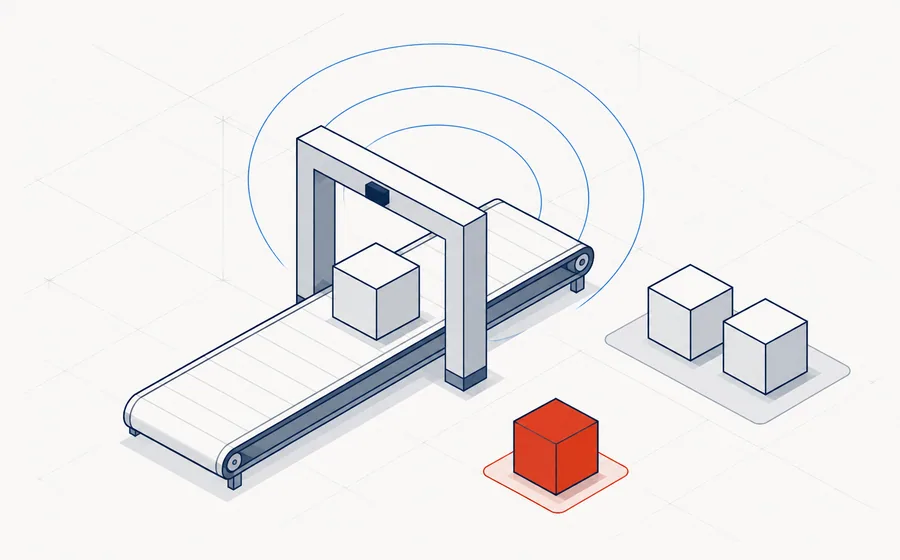
Checks that hold a dispatch, at the frequency this trade actually inspects.
| Parameter | Method | Frequency |
|---|---|---|
| TDS | TDS meter | Hourly |
| pH | pH meter | Hourly |
| Micro (48-hr) | Lab culture | Every lot |
| Cap torque | Torque tester | 2-hourly |
Wastage and recovery
The part generic ERPs get wrong.
Most systems can only write material off. In this trade that is the difference between a costing you believe and one you argue with.
Rules that ship with this template
- Preform/bottle rejects → PET regrind sale
- CIP and reject water metered daily
- 20L jar wash-rejects logged per trip
What drives your cost per unit
- Power per 1000 L treated
- Preform weight (g) per SKU
- Returnable-jar trip cost & deposit tracking
In short:Preform rejects, CIP water.
Compliance
What this trade has to prove.
Configured, not bolted on afterwards — the records come out of the same transactions your floor is already entering.
On the dashboard
The numbers this plant is judged on.
Sample figures from the demo, so you can see the shape of what you would be looking at every morning.
- Line efficiency
- 82%
- Water recovery (RO)
- 68%
- Jar return rate
- 91%
Illustrative values from the demo dataset, not a customer's figures.
Questions
Questions we get asked first.
Can it enforce hourly quality checks?
The inspection plan is scheduled by the hour against the running line, and a missed check is visible on the shift dashboard rather than discovered in an audit.
Does it handle pack sizes from 250ml to 20L?
Each pack is its own item with its own BOM for preform, cap and label, and its own filling rate. Line output converts to litres so plant capacity reads in one unit.
What about returnable 20L jars?
Jars are tracked as returnable packaging against the customer, with issued, returned and outstanding counts — the deposit ledger stops being a separate notebook.
See it running with Packaged Water data.
The demo opens with this trade's materials, machines, checks and reports already in place. No signup, nothing to install.