
Discrete / pairs
ERP for Footwear Manufacturers
Everything is pairs and size runs. A system that counts single units will tell you that you have stock you cannot actually ship.
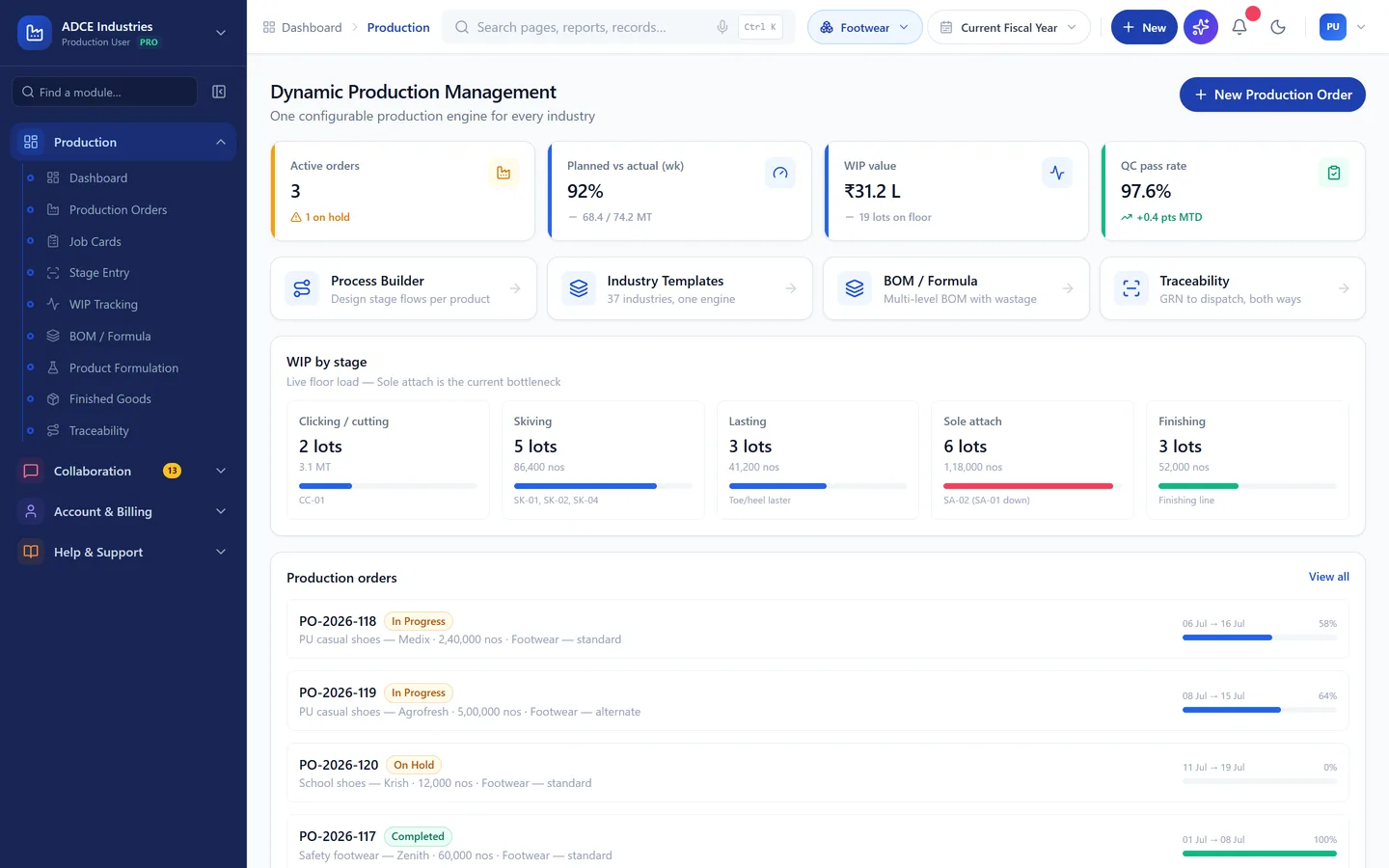
- Stages mapped
- 7
- Quality checks
- 3
- Wastage rules
- 3
- Compliance items
- 3
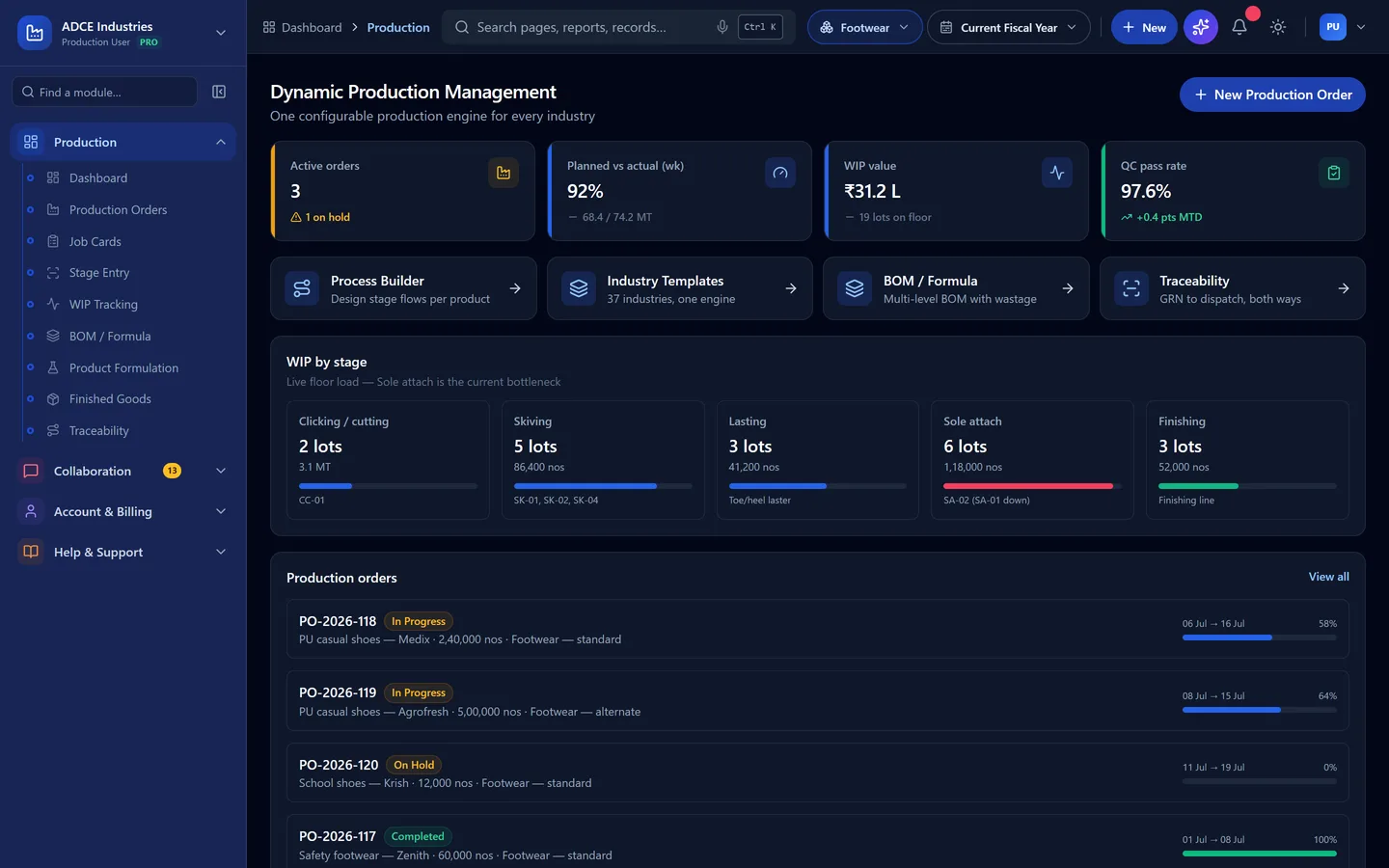
Your process
The stages, already mapped.
Cutting to lasting with size-pair control. These are the stages the template ships with — machines and checks included. Yours will differ in detail; that is configuration, not development.
- 1
Clicking / cutting
Cut uppers from leather/synthetic with pattern economy
- Machines
- Clicking press
- Checked
- Component audit
- 2
Skiving
Thin edges for folding and stitching
- Machines
- Skiving m/c
- Checked
- Skive width/depth
- 3
Stitching
Close uppers with reinforcements
- Machines
- Post/flat machines
- Checked
- Stitch density
- 4
Lasting
Shape upper over last, attach insole
- Machines
- Toe/heel laster
- Checked
- Lasting defects
- 5
Sole attach
Cement/direct-inject sole bonding
- Machines
- PU pouring/press
- Checked
- Bond peel strength
- 6
Finishing
Clean, spray, lace and pair-match
- Machines
- Finishing line
- Checked
- Pair matching
- 7
Boxing
Box per size curve with barcodes
- Machines
- Packing line
- Checked
- Size ratio audit
What goes in
Leather/synthetic, soles, adhesives
What comes out
Footwear pairs by size
PU casual shoes · Safety footwear · School shoes
Who is it for
Not all footwear manufacturers work the same way.
The template is the same; what it has to answer for is not. Find the one that sounds like you — if none of them do, say so on the call and we will tell you honestly whether this is the right fit.
Volume footwear manufacturers
Size-ratio production, pair-wise costing and last inventory.
Export units
Buyer-wise styles, size runs and compliance documentation.
Job-work uppers and soles units
Customer material in, paid per pair.
MANUPRIME AI
Ask it about this floor, in your own words.
The AI reads the same records this template creates — so on a footwear manufacturer floor the questions it can actually answer are the ones you already ask at the morning meeting.
Questions it answers here
- “Why has pairs/line/day moved this week?” — currently 1,450 in the demo data
- “Why has b-grade % moved this week?” — currently 2.1% in the demo data
- “Why has bond failures ppm moved this week?” — currently 350 in the demo data
- “Where is my wastage going?” — cutting waste, b-grade, costed back to the batch that caused it
- “What am I short of in the next 14 days?” — with the covering purchase order drafted for approval
And what it is not allowed to do
It shows its working, or it does not answer
It drafts. A person releases
It sees only what the person asking can see
Quality
What quality control looks like here.
Checks that hold a dispatch, at the frequency this trade actually inspects.
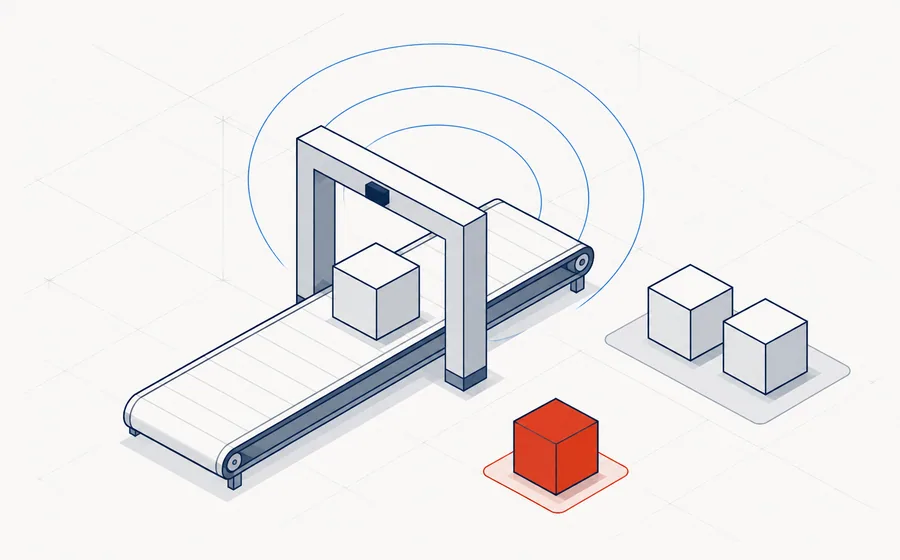
| Parameter | Method | Frequency |
|---|---|---|
| Bond peel strength | Peel tester | Per adhesive lot/shift |
| Flex resistance | Flex tester | Per design lot |
| Toe-cap impact (safety) | Impact rig | Per lot (IS 15298) |
Wastage and recovery
The part generic ERPs get wrong.
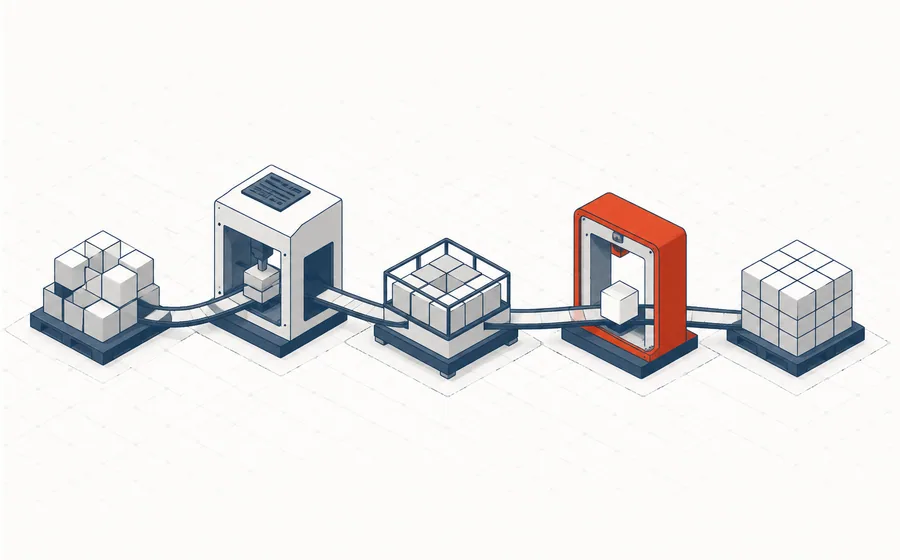
Most systems can only write material off. In this trade that is the difference between a costing you believe and one you argue with.
Rules that ship with this template
- Cutting waste by pattern efficiency (leather grading)
- B-grade pairs sold via seconds channel
- PU pour rejects reground where possible
What drives your cost per unit
- Upper material per pair by grading
- PU chemical per sole weight
- Pair-based labour (SAM)
In short:Cutting waste, B-grade.
Compliance
What this trade has to prove.
Configured, not bolted on afterwards — the records come out of the same transactions your floor is already entering.
On the dashboard
The numbers this plant is judged on.
Sample figures from the demo, so you can see the shape of what you would be looking at every morning.
- Pairs/line/day
- 1,450
- B-grade %
- 2.1%
- Bond failures ppm
- 350
Illustrative values from the demo dataset, not a customer's figures.
Questions
Questions we get asked first.
Does it understand size runs and pairs?
Yes. Production, stock and orders work on the size grid, and an incomplete pair is not counted as sellable stock.
How is cutting waste tracked?
Leather or synthetic issued against components cut gives utilisation per hide or per roll, which is where most of the cost sits.
Can it record bond strength testing?
Yes, as an inspection parameter on sole attach, sampled per lot, with failures routed to rework rather than packed.
See it running with Footwear data.
The demo opens with this trade's materials, machines, checks and reports already in place. No signup, nothing to install.