
Batch / high volume
ERP for FMCG Manufacturers
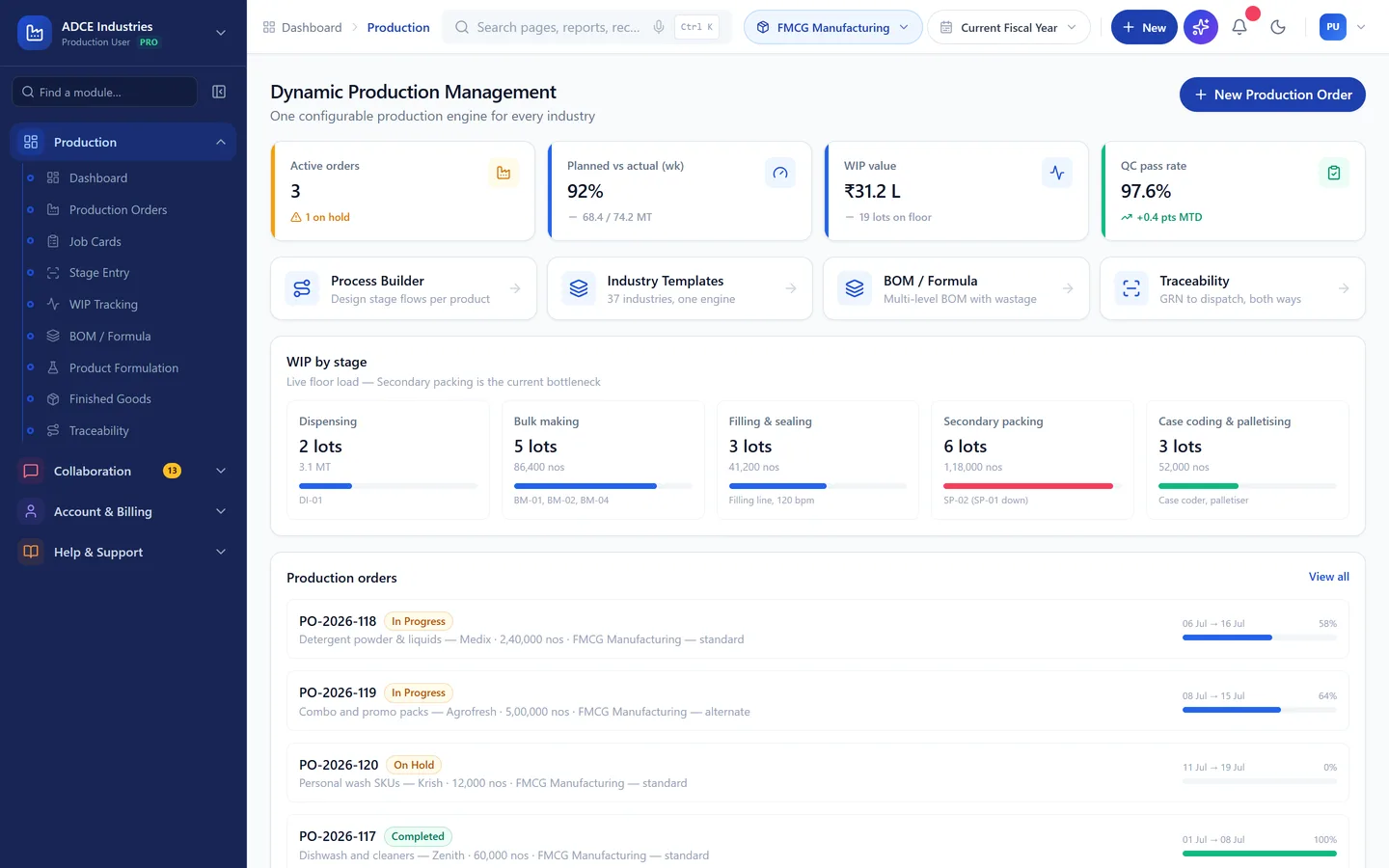
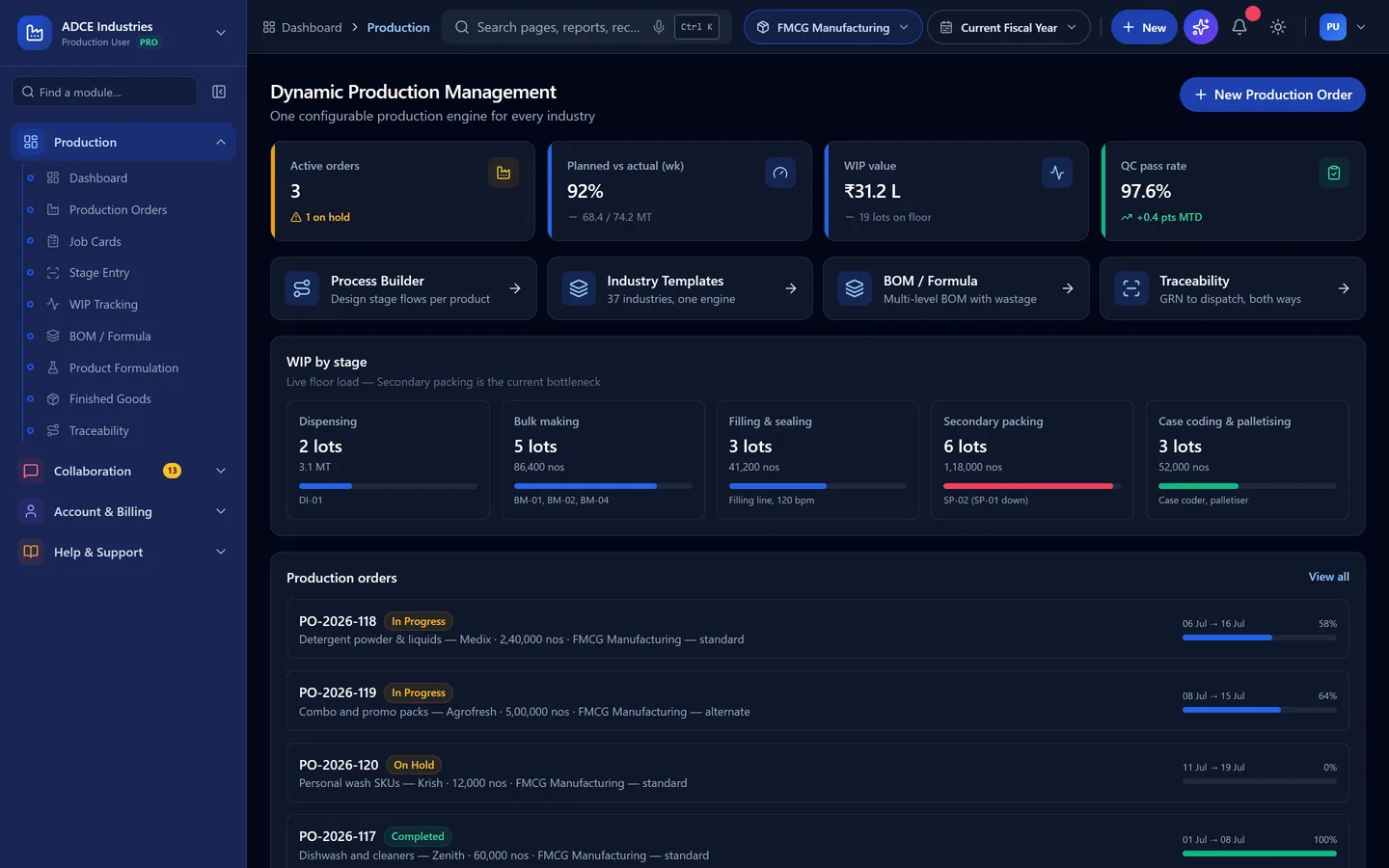
One bulk batch becomes eleven SKUs, four of them promo packs that will exist for six weeks. The costing question is not what the batch cost — it is what the combo pack cost after the scheme.
- Stages mapped
- 6
- Quality checks
- 4
- Wastage rules
- 3
- Compliance items
- 3
Your process
The stages, already mapped.
Bulk making to multi-SKU filling with promo packs. These are the stages the template ships with — machines and checks included. Yours will differ in detail; that is configuration, not development.
- 1
Dispensing
Weigh the formula into the making vessel against the batch card
- Machines
- Dispensing bay, load cells
- Checked
- Charge weight vs formula
- 2
Bulk making
Mix and neutralise to the target active content
- Machines
- Making vessel 5 KL
- Checked
- Active %, pH
- 3
Bulk QC release
Hold the bulk until the lab clears active, pH and odour
- Machines
- QC lab
- Checked
- Active, pH, odour panel
- 4
Filling & sealing
Fill the released bulk into the SKUs on the day plan
- Machines
- Filling line, 120 bpm
- Checked
- Fill weight, cap torque, seal
- 5
Secondary packing
Shrink, carton and build the promo configurations
- Machines
- Shrink tunnel, carton former
- Checked
- Count per case, pack integrity
- 6
Case coding & palletising
Code the case with the batch and build the pallet for dispatch
- Machines
- Case coder, palletiser
- Checked
- Code legibility, pallet pattern
What goes in
Bulk actives, fragrance, multi-vendor packaging
What comes out
Retail SKUs, combo and promo packs
Detergent powder & liquids · Dishwash and cleaners · Personal wash SKUs · Combo and promo packs
Who is it for
Not all FMCG manufacturers work the same way.
The template is the same; what it has to answer for is not. Find the one that sounds like you — if none of them do, say so on the call and we will tell you honestly whether this is the right fit.
High-volume consumer goods manufacturers
Batch production against forecast, SKU-heavy dispatch.
Contract manufacturers for FMCG brands
Per-brand batches, artwork control and brand-wise costing.
Regional brands with a distributor network
Scheme-driven sales and primary/secondary stock.
MANUPRIME AI
Ask it about this floor, in your own words.
The AI reads the same records this template creates — so on a FMCG manufacturer floor the questions it can actually answer are the ones you already ask at the morning meeting.
Questions it answers here
- “Why has line efficiency moved this week?” — currently 84% in the demo data
- “Why has fill weight giveaway moved this week?” — currently 0.7% in the demo data
- “Why has changeover time moved this week?” — currently 38 min in the demo data
- “Where is my wastage going?” — changeover loss, damaged packs, promo overs, costed back to the batch that caused it
- “What am I short of in the next 14 days?” — with the covering purchase order drafted for approval
And what it is not allowed to do
It shows its working, or it does not answer
It drafts. A person releases
It sees only what the person asking can see
Quality
What quality control looks like here.
Checks that hold a dispatch, at the frequency this trade actually inspects.
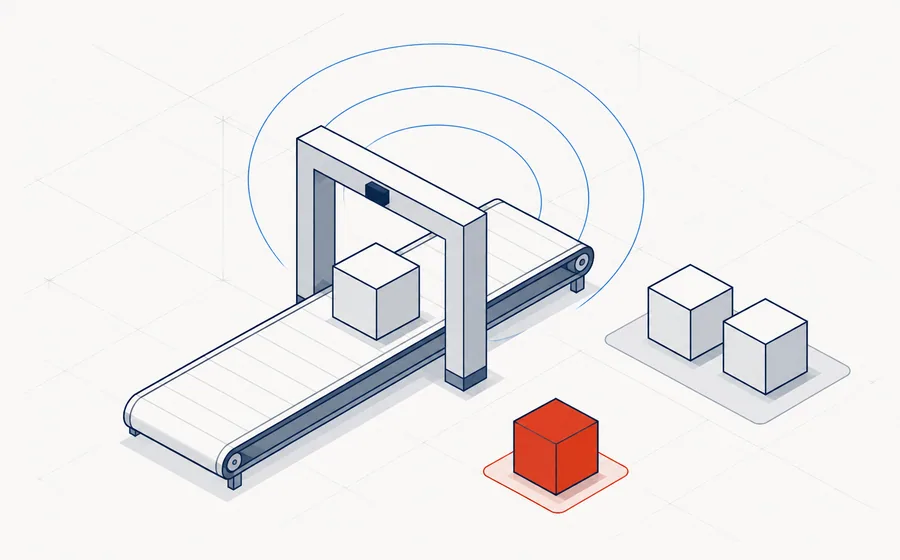
| Parameter | Method | Frequency |
|---|---|---|
| Active content | Titration | Every bulk batch |
| Fill weight | Checkweigher | Continuous |
| pH | Calibrated meter | Every bulk batch |
| Seal integrity | Vacuum test | Hourly |
Wastage and recovery
The part generic ERPs get wrong.
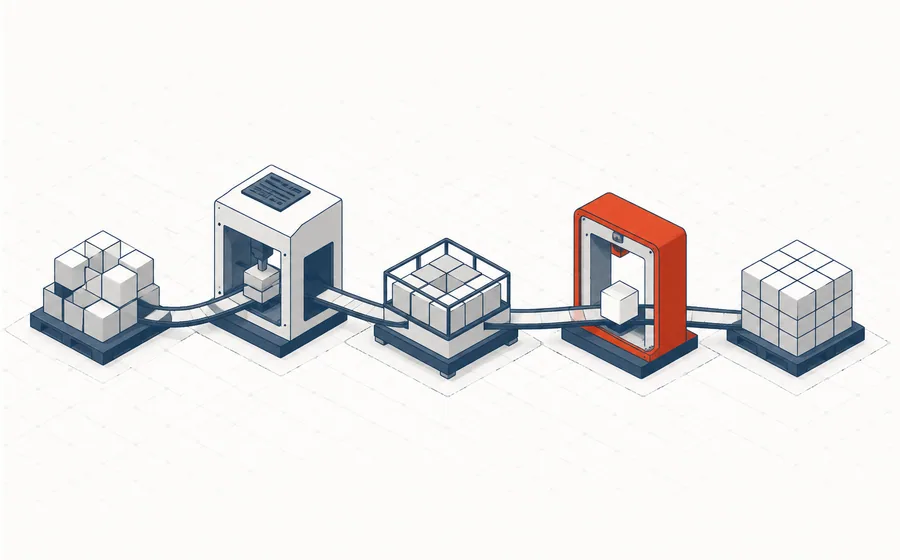
Most systems can only write material off. In this trade that is the difference between a costing you believe and one you argue with.
Rules that ship with this template
- Changeover flush booked to the SKU being changed to
- Damaged packs returned to filling as bulk where the pack contents are intact
- Promo overs planned and costed as a scheme cost, not reported as a variance
What drives your cost per unit
- Bulk cost per kg at actual active content
- Line-hour rate per filling line including changeover
- Packaging cost per SKU including promo material
In short:Changeover loss, damaged packs, promo overs.
Compliance
What this trade has to prove.
Configured, not bolted on afterwards — the records come out of the same transactions your floor is already entering.
On the dashboard
The numbers this plant is judged on.
Sample figures from the demo, so you can see the shape of what you would be looking at every morning.
- Line efficiency
- 84%
- Fill weight giveaway
- 0.7%
- Changeover time
- 38 min
Illustrative values from the demo dataset, not a customer's figures.
Questions
Questions we get asked first.
Can one bulk batch feed several SKUs and stay traceable?
The bulk carries its own batch and every filled SKU keeps the link back to it. A complaint on a 500 ml pack finds the bulk, and the bulk finds every other SKU filled from it.
Do combo and promo packs work as real items?
They are assembled items with their own BOM, so a combo consumes the components it actually contains and carries the promo material as a costed line. The scheme cost sits against the pack instead of disappearing into a discount.
How is changeover handled?
Changeover is a costed event on the line with its own time and flush quantity, charged to the SKU being changed to. Short runs then look as expensive as they actually are, which is usually the point of asking.
See it running with FMCG Manufacturing data.
The demo opens with this trade's materials, machines, checks and reports already in place. No signup, nothing to install.