
Discrete / SMT
ERP for Electronics Manufacturers
Component attrition, MSL exposure and a board that fails at functional test after three stages of value have been added. Traceability here is to the serial, not the batch.
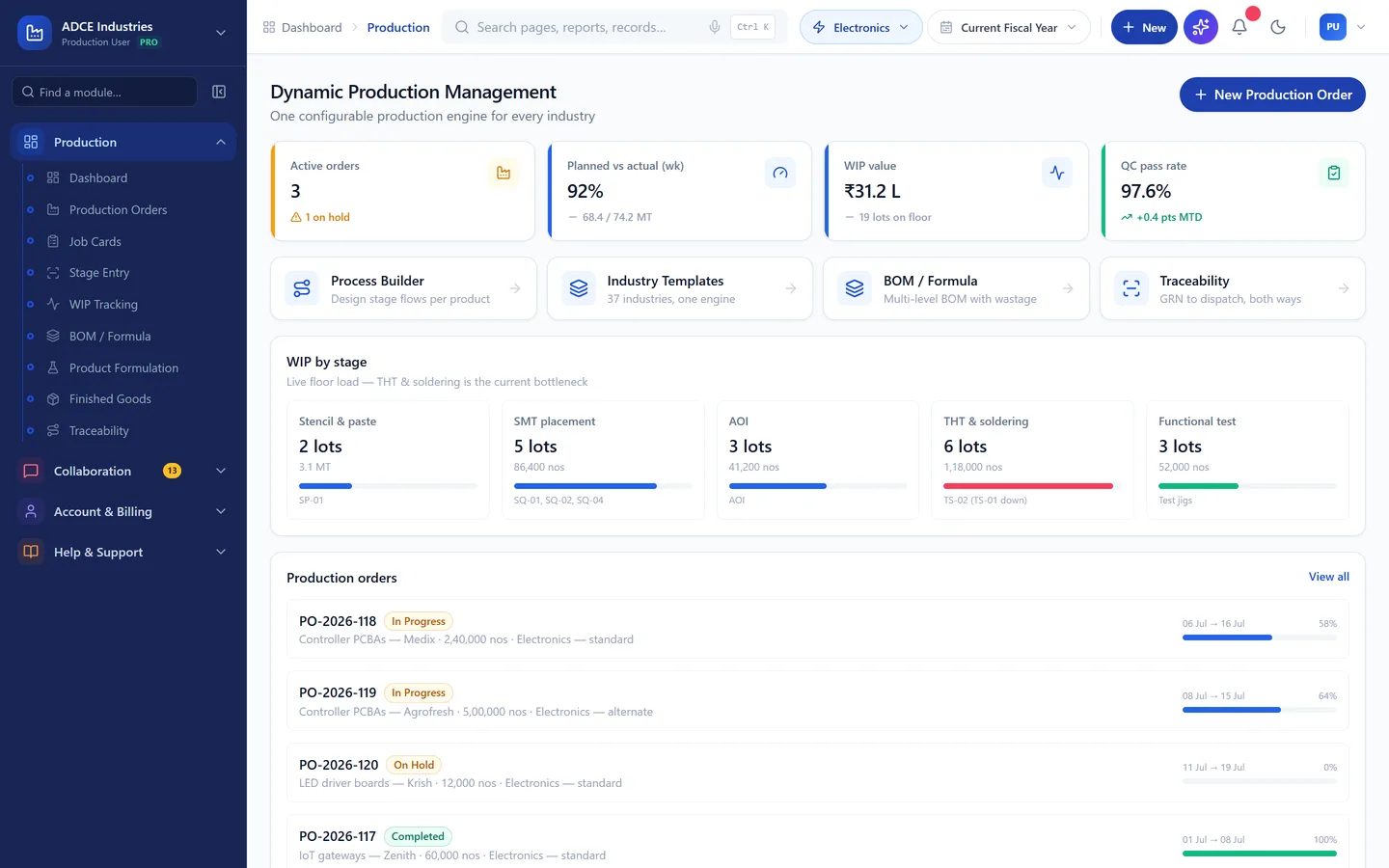
- Stages mapped
- 7
- Quality checks
- 4
- Wastage rules
- 3
- Compliance items
- 3
Your process
The stages, already mapped.
SMT and assembly with AOI and serial traceability. These are the stages the template ships with — machines and checks included. Yours will differ in detail; that is configuration, not development.
- 1
Stencil & paste
Solder-paste printing with stencil inspection
- Machines
- Paste printer
- Checked
- SPI (paste height)
- 2
SMT placement
High-speed component placement from reels (MSL controlled)
- Machines
- Pick & place
- Checked
- First-article check
- 3
Reflow
Reflow soldering with profiled ovens
- Machines
- Reflow oven
- Checked
- Profile log
- 4
AOI
Automated optical inspection of joints and polarity
- Machines
- AOI
- Checked
- Defect ppm capture
- 5
THT & soldering
Through-hole insertion and wave/selective solder
- Machines
- Wave solder
- Checked
- Joint inspection
- 6
Functional test
Firmware flash and functional/ICT testing with serial log
- Machines
- Test jigs
- Checked
- Test pass log per serial
- 7
Boxing
Conformal coat (optional), pack with ESD protection
- Machines
- Coating booth
- Checked
- Coating coverage
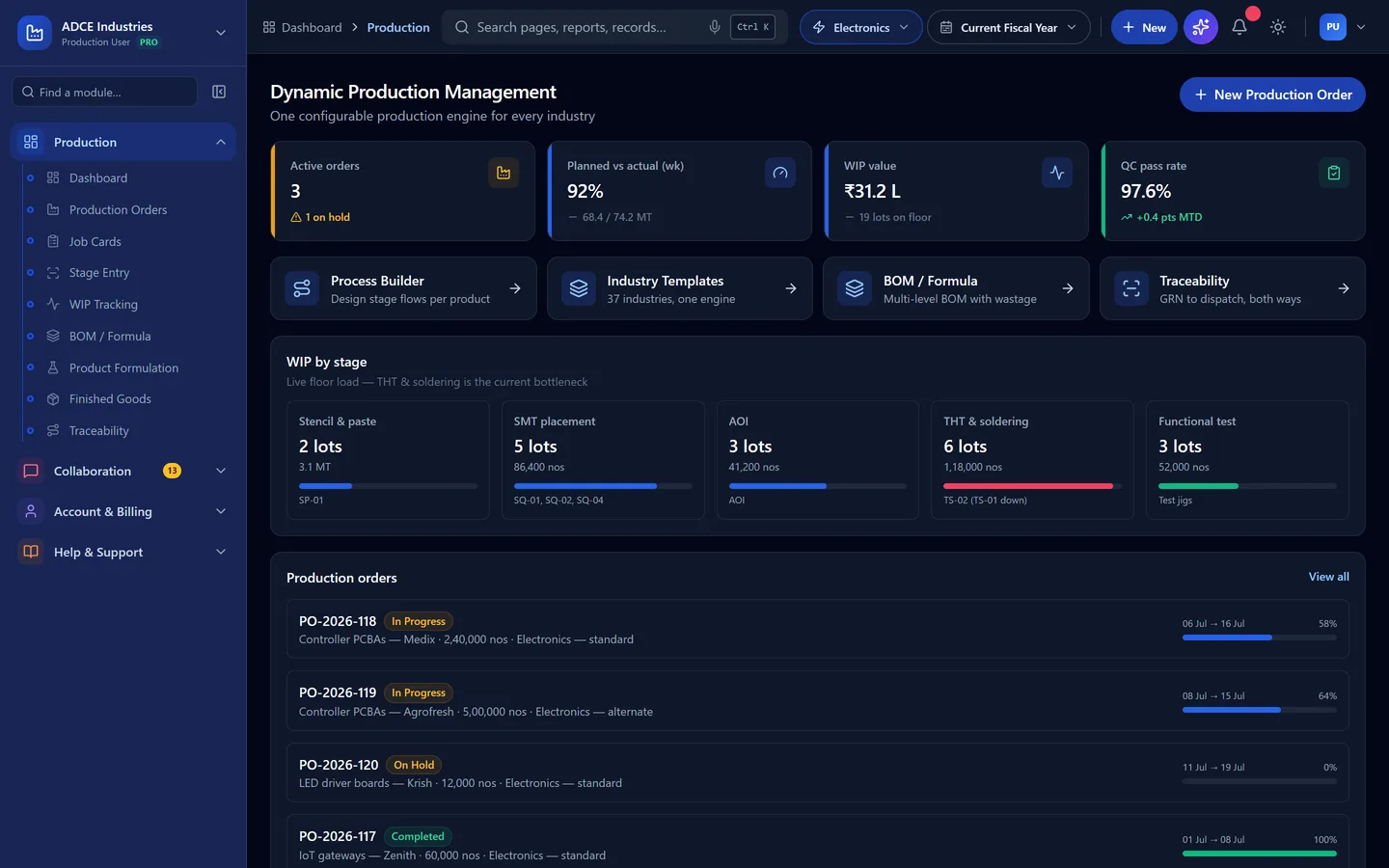
What goes in
PCBs, components (MSL controlled)
What comes out
Assembled PCBAs, devices
Controller PCBAs · IoT gateways · LED driver boards
Who is it for
Not all electronics manufacturers work the same way.
The template is the same; what it has to answer for is not. Find the one that sounds like you — if none of them do, say so on the call and we will tell you honestly whether this is the right fit.
PCB assembly & SMT houses
Reference-designator BOMs, reel-level stock and AOI results.
Box-build & product assemblers
Serialised units with firmware version and test records.
EMS units running customer-owned material
Free-issue components accounted separately from your own.
MANUPRIME AI
Ask it about this floor, in your own words.
The AI reads the same records this template creates — so on a electronics manufacturer floor the questions it can actually answer are the ones you already ask at the morning meeting.
Questions it answers here
- “Why has first-pass yield moved this week?” — currently 97.8% in the demo data
- “Why has aoi defect ppm moved this week?” — currently 410 in the demo data
- “Why has placements/hour moved this week?” — currently 38k in the demo data
- “Where is my wastage going?” — component attrition, failed boards, costed back to the batch that caused it
- “What am I short of in the next 14 days?” — with the covering purchase order drafted for approval
And what it is not allowed to do
It shows its working, or it does not answer
It drafts. A person releases
It sees only what the person asking can see
Quality
What quality control looks like here.
Checks that hold a dispatch, at the frequency this trade actually inspects.
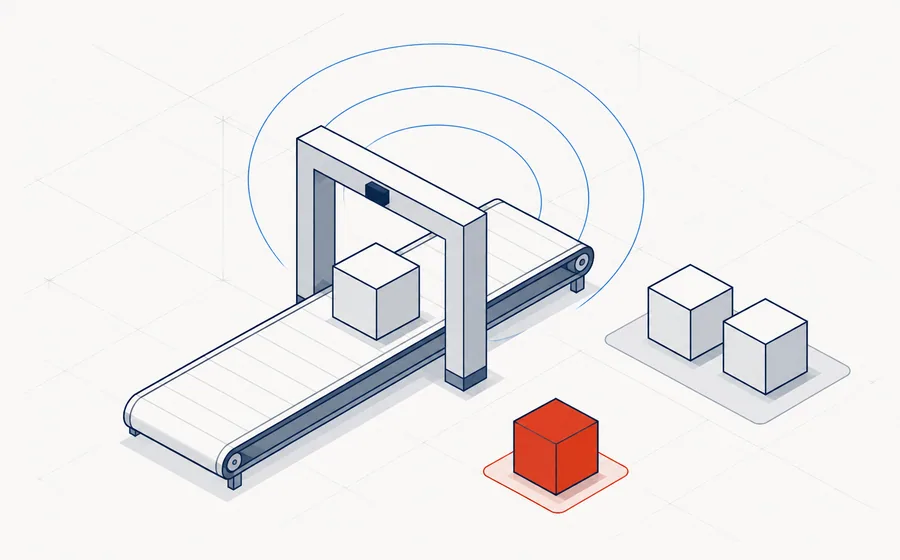
| Parameter | Method | Frequency |
|---|---|---|
| Paste deposition | SPI | 100% inline |
| Joint defects | AOI | 100% inline |
| Functional pass | Automated jig | 100% with serial log |
| MSL exposure | Floor-life tracker | Continuous |
Wastage and recovery
The part generic ERPs get wrong.
Most systems can only write material off. In this trade that is the difference between a costing you believe and one you argue with.
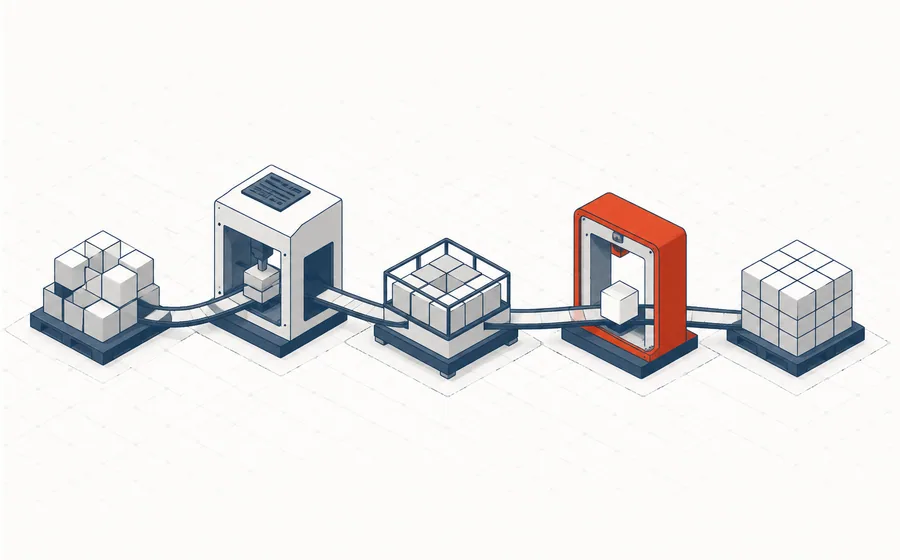
Rules that ship with this template
- Component attrition standard 1.5% on smalls
- Failed boards → repair bench, 2 passes max
- Solder dross weighed and sold
What drives your cost per unit
- BOM cost with exchange-rate variance
- SMT line-hour rate (placements/hr)
- Test time per board
In short:Component attrition, failed boards.
Compliance
What this trade has to prove.
Configured, not bolted on afterwards — the records come out of the same transactions your floor is already entering.
On the dashboard
The numbers this plant is judged on.
Sample figures from the demo, so you can see the shape of what you would be looking at every morning.
- First-pass yield
- 97.8%
- AOI defect ppm
- 410
- Placements/hour
- 38k
Illustrative values from the demo dataset, not a customer's figures.
Questions
Questions we get asked first.
Does it track components down to the reel and date code?
Yes, at lot level, and a PCBA serial resolves back to the reels loaded on the line when it was built.
How is attrition handled?
The BOM carries an attrition percentage per component, so pick-and-place loss is planned for rather than showing up as a negative stock at the end of the run.
What happens to a board that fails functional test?
It goes to a rework route with the failure reason recorded. Rework cost accumulates against the board, so repeat-failure components become obvious.
See it running with Electronics data.
The demo opens with this trade's materials, machines, checks and reports already in place. No signup, nothing to install.