
Process / kilns
ERP for Ceramic & Tile Manufacturers
A kiln does not care about your plan. Green rejects, fired seconds and shade variation mean output is graded, not counted — and seconds are a real revenue line.
- Stages mapped
- 7
- Quality checks
- 3
- Wastage rules
- 3
- Compliance items
- 3
Your process
The stages, already mapped.
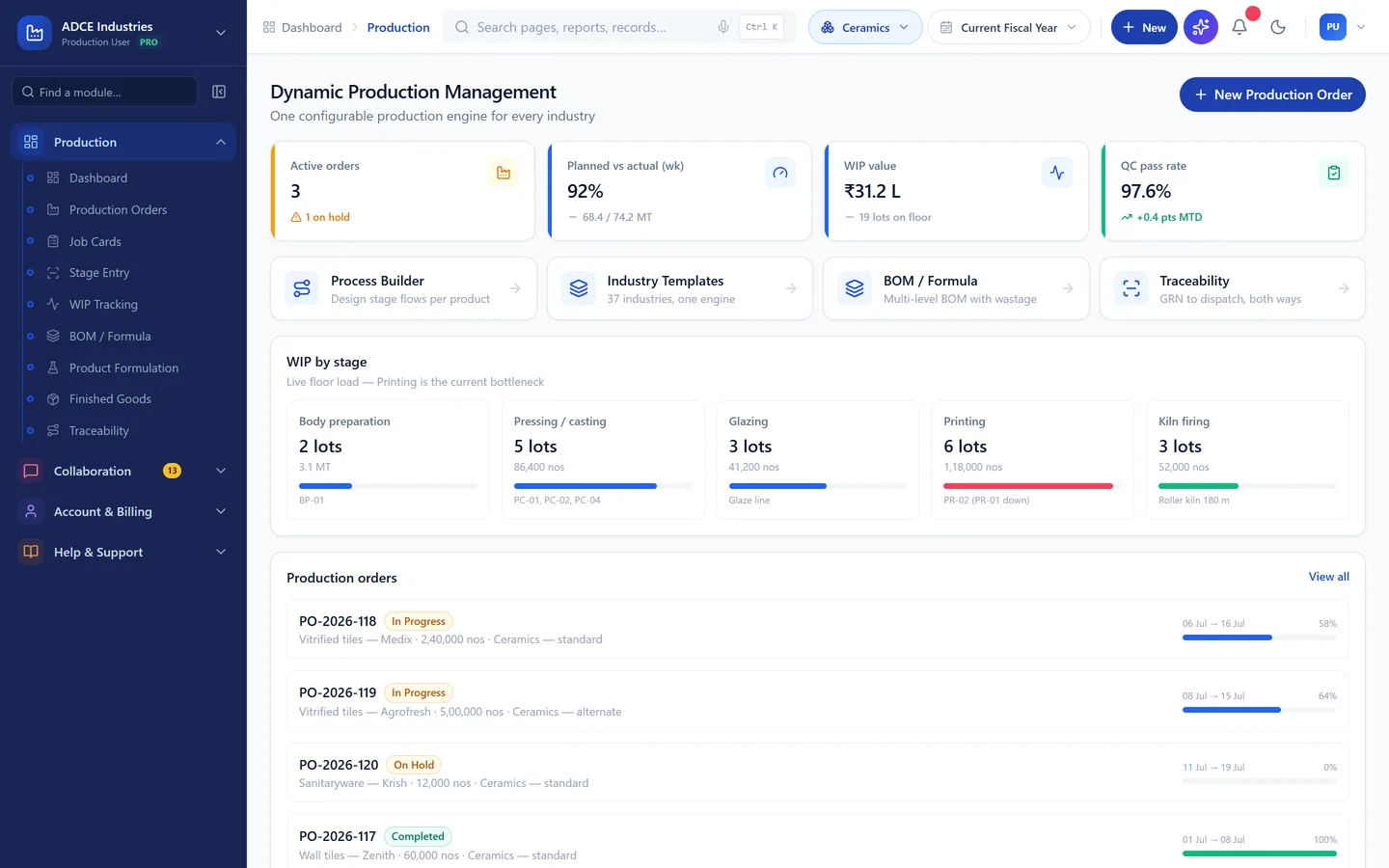
Body prep to kiln firing and sorting. These are the stages the template ships with — machines and checks included. Yours will differ in detail; that is configuration, not development.
- 1
Body preparation
Ball-mill clays and prepare spray-dried granules
- Machines
- Ball mill, spray dryer
- Checked
- Moisture, granule size
- 2
Pressing / casting
Hydraulic pressing of tiles or slip casting of ware
- Machines
- Press 4300 T
- Checked
- Green density, thickness
- 3
Drying
Controlled drying to green strength
- Machines
- Horizontal dryer
- Checked
- Residual moisture
- 4
Glazing
Engobe + glaze application with weight control
- Machines
- Glaze line
- Checked
- Glaze weight, density
- 5
Printing
Digital inkjet decoration
- Machines
- Digital printer
- Checked
- Design registration
- 6
Kiln firing
Single-fire roller kiln with curve control
- Machines
- Roller kiln 180 m
- Checked
- Kiln curve log
- 7
Sorting & packing
Auto-sort by caliber/shade, box and palletise
- Machines
- Sorting line
- Checked
- Caliber, shade code
What goes in
Clays, feldspar, glazes
What comes out
Tiles, sanitaryware
Vitrified tiles · Wall tiles · Sanitaryware
Who is it for
Not all ceramic & tile manufacturers work the same way.
The template is the same; what it has to answer for is not. Find the one that sounds like you — if none of them do, say so on the call and we will tell you honestly whether this is the right fit.
Tile manufacturers
Kiln batches, size and grade-wise sorting, shade lots.
Sanitaryware & tableware units
Slip batches, firing losses and grade-wise pricing.
Technical & refractory ceramics
Spec-bound batches with test certificates per lot.
MANUPRIME AI
Ask it about this floor, in your own words.
The AI reads the same records this template creates — so on a ceramic & tile manufacturer floor the questions it can actually answer are the ones you already ask at the morning meeting.
Questions it answers here
- “Why has premium grade % moved this week?” — currently 92% in the demo data
- “Why has gas mj/m² moved this week?” — currently 58 in the demo data
- “Why has kiln uptime moved this week?” — currently 96% in the demo data
- “Where is my wastage going?” — green rejects, fired seconds, costed back to the batch that caused it
- “What am I short of in the next 14 days?” — with the covering purchase order drafted for approval
And what it is not allowed to do
It shows its working, or it does not answer
It drafts. A person releases
It sees only what the person asking can see
Quality
What quality control looks like here.
Checks that hold a dispatch, at the frequency this trade actually inspects.
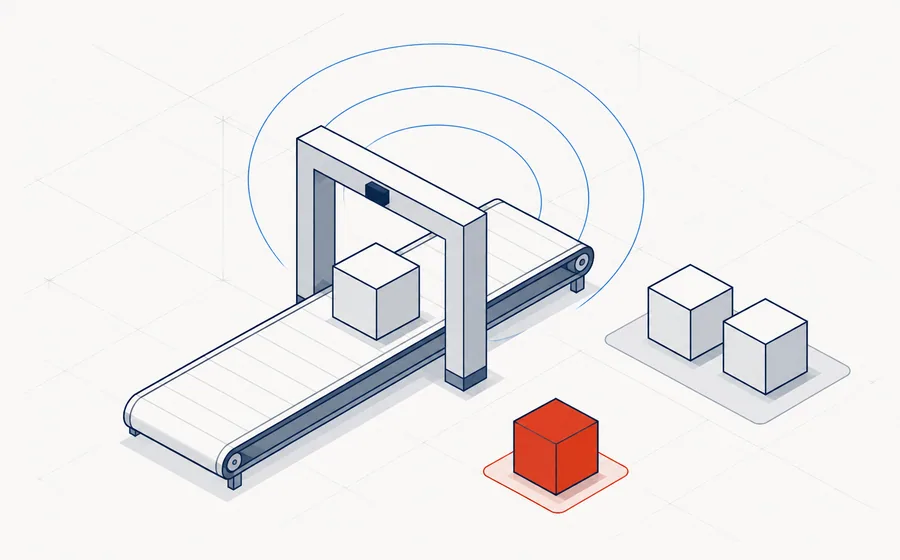
| Parameter | Method | Frequency |
|---|---|---|
| Water absorption | Boil method (IS 15622) | Per kiln lot |
| Breaking strength | Flexural rig | Per lot |
| Shade & caliber | Auto-sorter | 100% |
Wastage and recovery
The part generic ERPs get wrong.
Most systems can only write material off. In this trade that is the difference between a costing you believe and one you argue with.
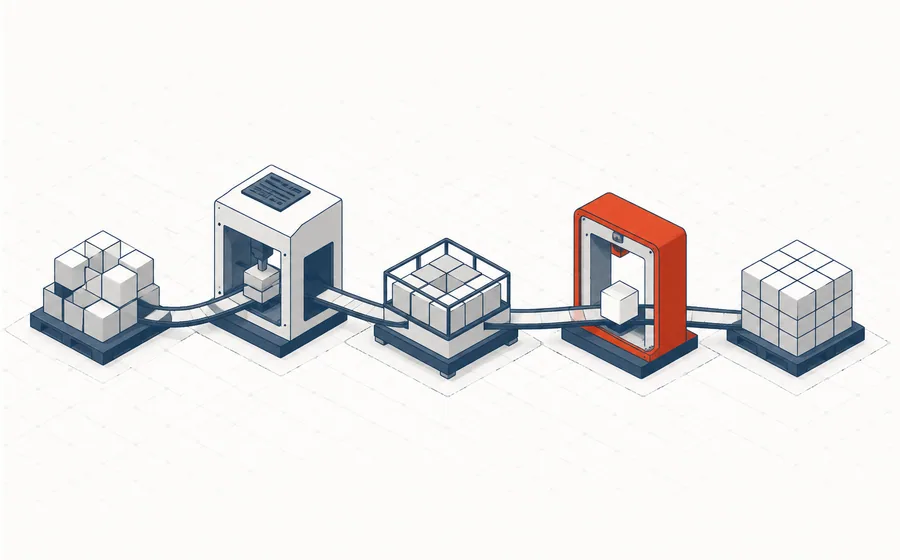
Rules that ship with this template
- Green rejects recycled to body prep
- Fired seconds sold by grade (Std/Eco)
- Glaze reclaim reused with %-cap
What drives your cost per unit
- Gas cost per m² fired (dominant)
- Body recipe cost per tonne
- Digital ink per m² by design
In short:Green rejects, fired seconds.
Compliance
What this trade has to prove.
Configured, not bolted on afterwards — the records come out of the same transactions your floor is already entering.
On the dashboard
The numbers this plant is judged on.
Sample figures from the demo, so you can see the shape of what you would be looking at every morning.
- Premium grade %
- 92%
- Gas MJ/m²
- 58
- Kiln uptime
- 96%
Illustrative values from the demo dataset, not a customer's figures.
Questions
Questions we get asked first.
Does it handle grading into firsts and seconds?
Yes. Sorting assigns grade and shade, each a saleable item at its own rate, so a commercial-grade tile is inventory rather than a write-off.
Can we track shade and calibre?
Shade and calibre are attributes on the finished lot, and orders can be restricted to a single shade so a customer laying a floor gets consistent tiles.
How are green and fired rejects separated?
They are distinct wastage reasons at their own stages, which matters because a green reject costs a fraction of a fired one.
See it running with Ceramics data.
The demo opens with this trade's materials, machines, checks and reports already in place. No signup, nothing to install.