
Discrete / PPAP
ERP for Auto Component Manufacturers
SPC on critical dimensions, PPAP documents your customer will audit, and a rejection that reaches the OEM costs far more than the part. Traceability is contractual here.
- Stages mapped
- 7
- Quality checks
- 3
- Wastage rules
- 3
- Compliance items
- 3
Your process
The stages, already mapped.
Machining and assembly with SPC and PPAP docs. These are the stages the template ships with — machines and checks included. Yours will differ in detail; that is configuration, not development.
- 1
Blanking / casting inward
Receive castings/forgings with lot traceability
- Machines
- Inward + weighbridge
- Checked
- Casting soundness sample
- 2
CNC machining
Machine to drawing with SPC on CTQs
- Machines
- CNC turning/VMC cells
- Checked
- SPC x̄-R charts
- 3
Deburring
Remove burrs and wash components
- Machines
- Deburr + washer
- Checked
- Visual + burr spec
- 4
Heat treatment
Harden/temper to hardness band (in-house or job work)
- Machines
- Sealed quench furnace
- Checked
- Hardness HRC
- 5
Grinding
Finish critical diameters/faces
- Machines
- Cylindrical grinder
- Checked
- Size, runout
- 6
Final inspection
PDI per control plan with CMM sampling
- Machines
- CMM, gauges
- Checked
- Control-plan items
- 7
Packing
Rust-preventive + returnable bins per customer standard
- Machines
- Packing line
- Checked
- Bin count, RP oil
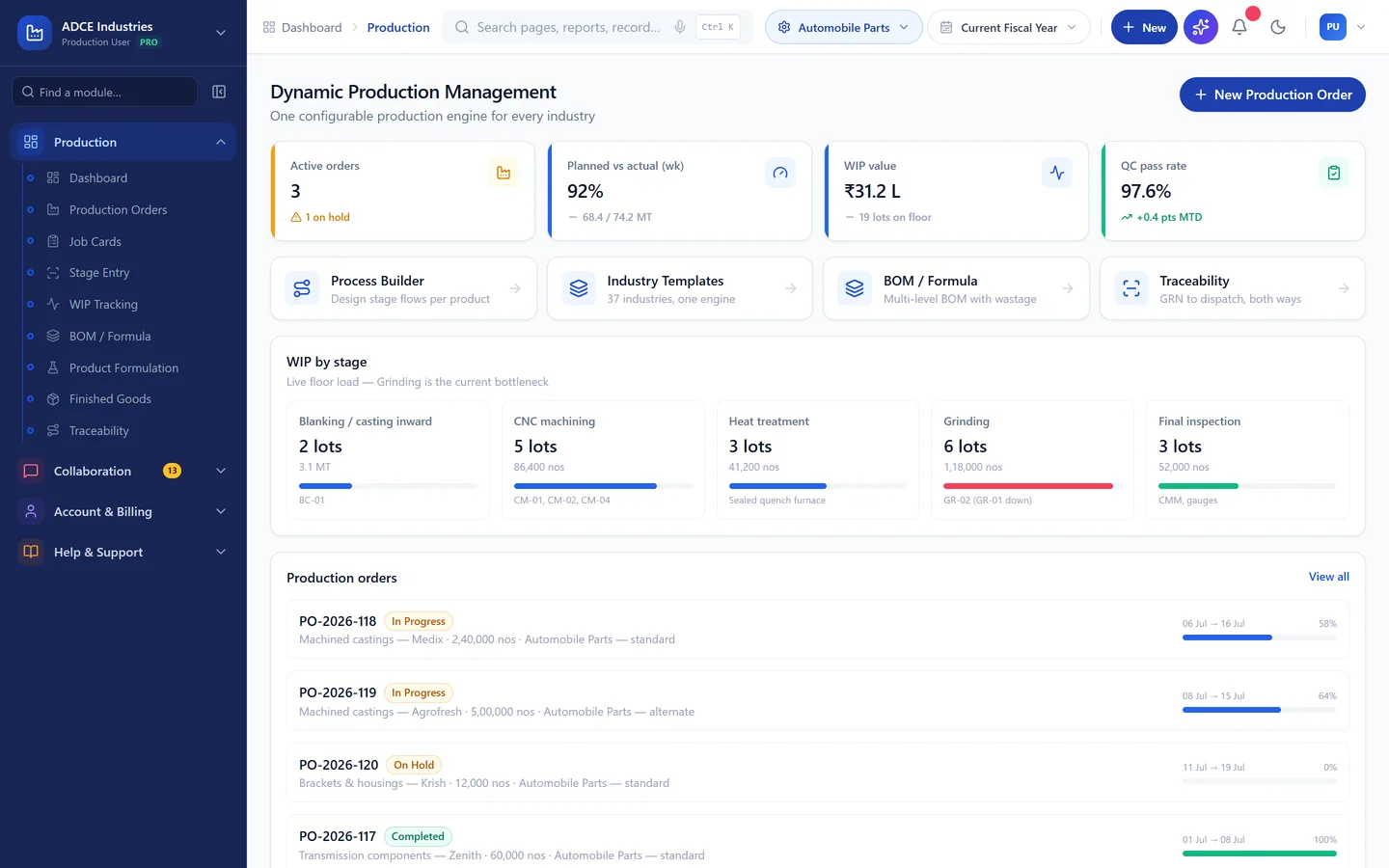
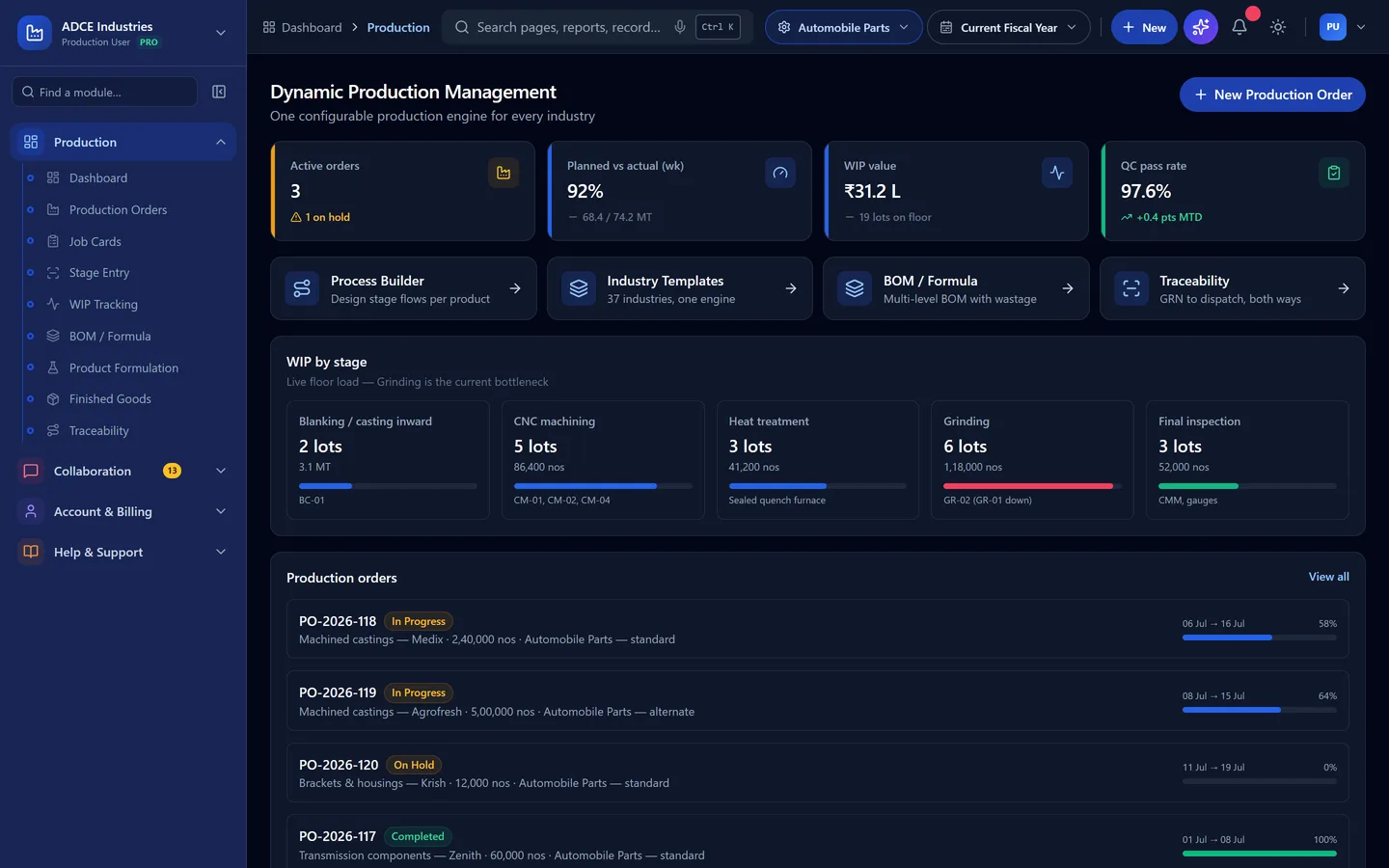
What goes in
Castings, forgings, bar stock
What comes out
Machined components
Machined castings · Transmission components · Brackets & housings
Who is it for
Not all auto component manufacturers work the same way.
The template is the same; what it has to answer for is not. Find the one that sounds like you — if none of them do, say so on the call and we will tell you honestly whether this is the right fit.
Tier-1 & tier-2 component makers
PPAP documents, customer schedules and PPM tracking.
Machining & forging job shops
Operation-wise routing and per-piece cycle costing.
Aftermarket parts manufacturers
Own brand, own packing, dealer and distributor stock.
MANUPRIME AI
Ask it about this floor, in your own words.
The AI reads the same records this template creates — so on a auto component manufacturer floor the questions it can actually answer are the ones you already ask at the morning meeting.
Questions it answers here
- “Why has customer ppm moved this week?” — currently 180 in the demo data
- “Why has cpk (critical) moved this week?” — currently 1.68 in the demo data
- “Why has tool cost/1000 moved this week?” — currently ₹412 in the demo data
- “Where is my wastage going?” — machining scrap, rejects, costed back to the batch that caused it
- “What am I short of in the next 14 days?” — with the covering purchase order drafted for approval
And what it is not allowed to do
It shows its working, or it does not answer
It drafts. A person releases
It sees only what the person asking can see
Quality
What quality control looks like here.
Checks that hold a dispatch, at the frequency this trade actually inspects.
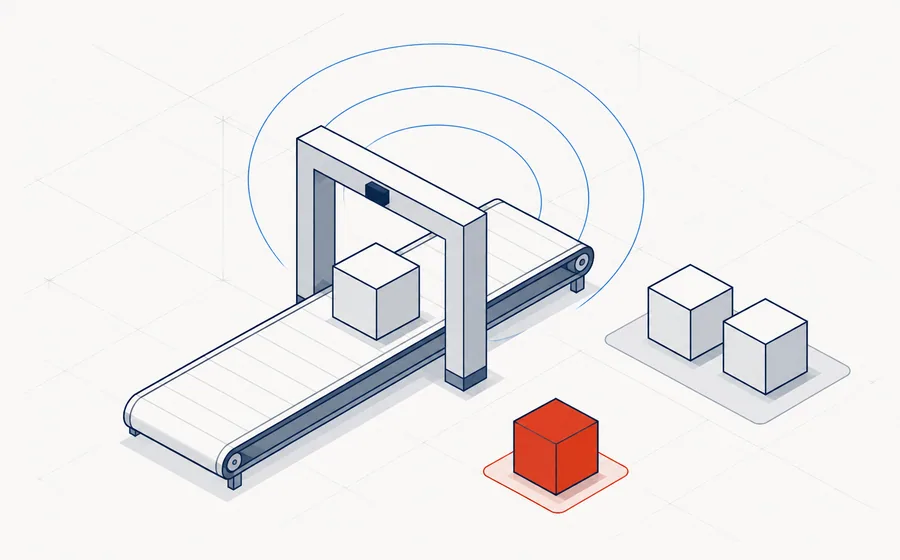
| Parameter | Method | Frequency |
|---|---|---|
| CTQ dimensions | SPC with gauges/CMM | Per control plan |
| Hardness | Rockwell tester | Per HT lot |
| Cpk on CTQs | SPC software | Monthly review |
Wastage and recovery
The part generic ERPs get wrong.
Most systems can only write material off. In this trade that is the difference between a costing you believe and one you argue with.
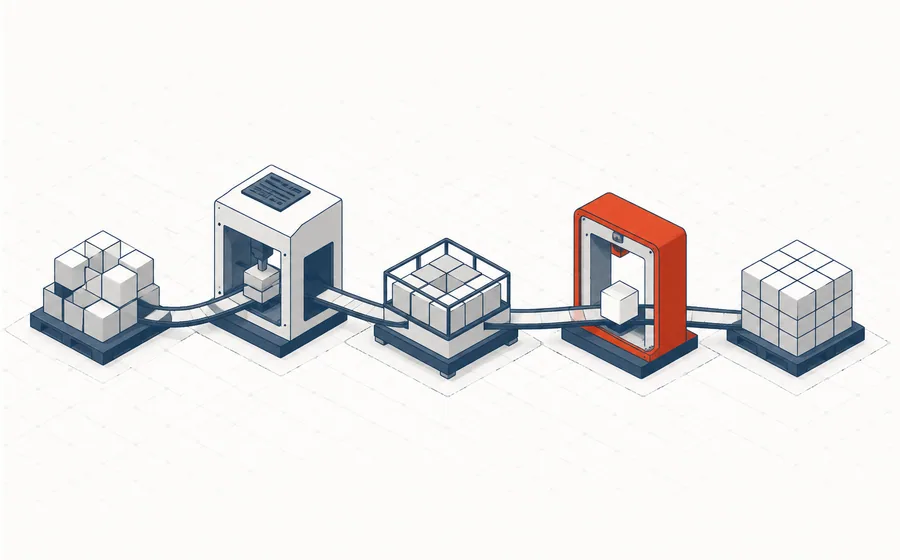
Rules that ship with this template
- Machining scrap (chips) sold by weight with TCS
- Casting rejections debited to foundry
- Rework routed with red tag + reinspection
What drives your cost per unit
- Cycle-time based machine cost per op
- Tooling cost per 1000 pcs
- Heat-treatment cost per kg
In short:Machining scrap, rejects.
Compliance
What this trade has to prove.
Configured, not bolted on afterwards — the records come out of the same transactions your floor is already entering.
On the dashboard
The numbers this plant is judged on.
Sample figures from the demo, so you can see the shape of what you would be looking at every morning.
- Customer PPM
- 180
- Cpk (critical)
- 1.68
- Tool cost/1000
- ₹412
Illustrative values from the demo dataset, not a customer's figures.
Questions
Questions we get asked first.
Does it support SPC on CTQ dimensions?
Yes. Critical characteristics are measured at defined frequency and charted, so a drifting process is visible before it produces a rejection.
Can it hold PPAP documentation?
PPAP documents attach to the part and revision, with approval status, so the current submission level is known without searching a shared drive.
How far back does traceability go?
From a despatched part to the heat number of the casting or bar stock it was machined from, through every operation and inspection between.
See it running with Automobile Parts data.
The demo opens with this trade's materials, machines, checks and reports already in place. No signup, nothing to install.