
Discrete / to customer spec
ERP for OEM & Contract Manufacturers
Half of what is on your floor belongs to somebody else, it has to be inspected to their AQL and shipped under their brand, and your invoice is for conversion only. That is a different data model, not a different report.
- Stages mapped
- 7
- Quality checks
- 4
- Wastage rules
- 3
- Compliance items
- 3
Your process
The stages, already mapped.
Customer spec, customer brand, often customer material. These are the stages the template ships with — machines and checks included. Yours will differ in detail; that is configuration, not development.
- 1
Spec & drawing release
Freeze the customer specification and drawing revision for this run
- Machines
- Document control
- Checked
- Revision on the job vs customer release
- 2
Tooling readiness
Confirm the customer tooling is present, serviced and dimensionally sound
- Machines
- Tool room
- Checked
- Tool trial sample vs drawing
- 3
Free-issue material receipt
Receive customer-owned material on a challan and keep it stock-separate
- Machines
- Weighbridge, bonded store
- Checked
- Quantity vs challan, condition
- 4
Production run
Run against the customer order with their spec on the job card
- Machines
- Assembly / process line
- Checked
- In-process per the customer control plan
- 5
Customer-spec QC
Inspect to the customer AQL, which is not always the internal one
- Machines
- Inspection bay, gauges
- Checked
- AQL sampling, first-article record
- 6
Brand labelling & packing
Apply the customer brand and artwork and pack to their pack specification
- Machines
- Labelling line
- Checked
- Artwork revision, barcode scan
- 7
Dispatch with COC
Dispatch with the certificate of conformity and the material reconciliation
- Machines
- Dispatch bay
- Checked
- COC completeness, free-issue reconciliation
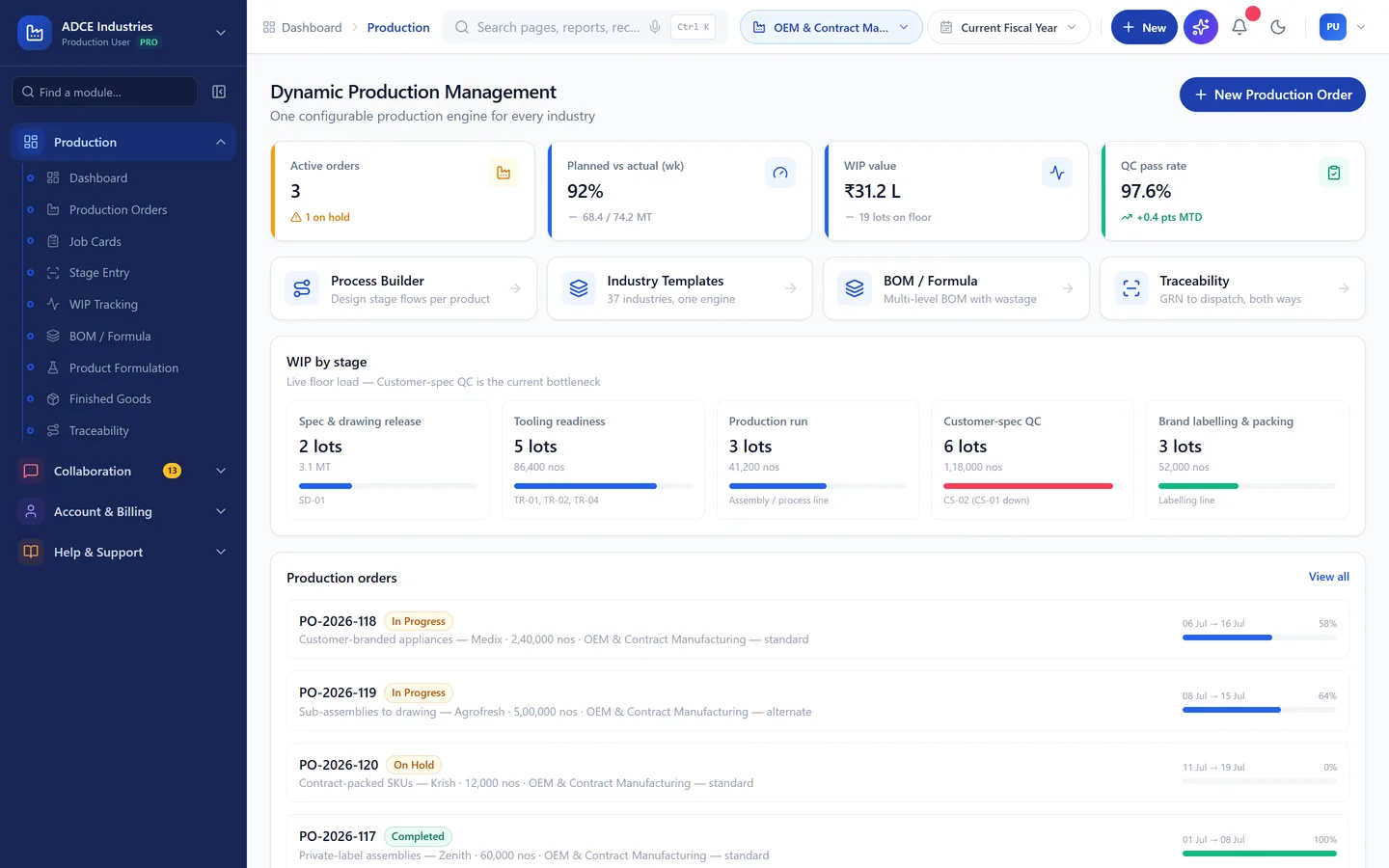
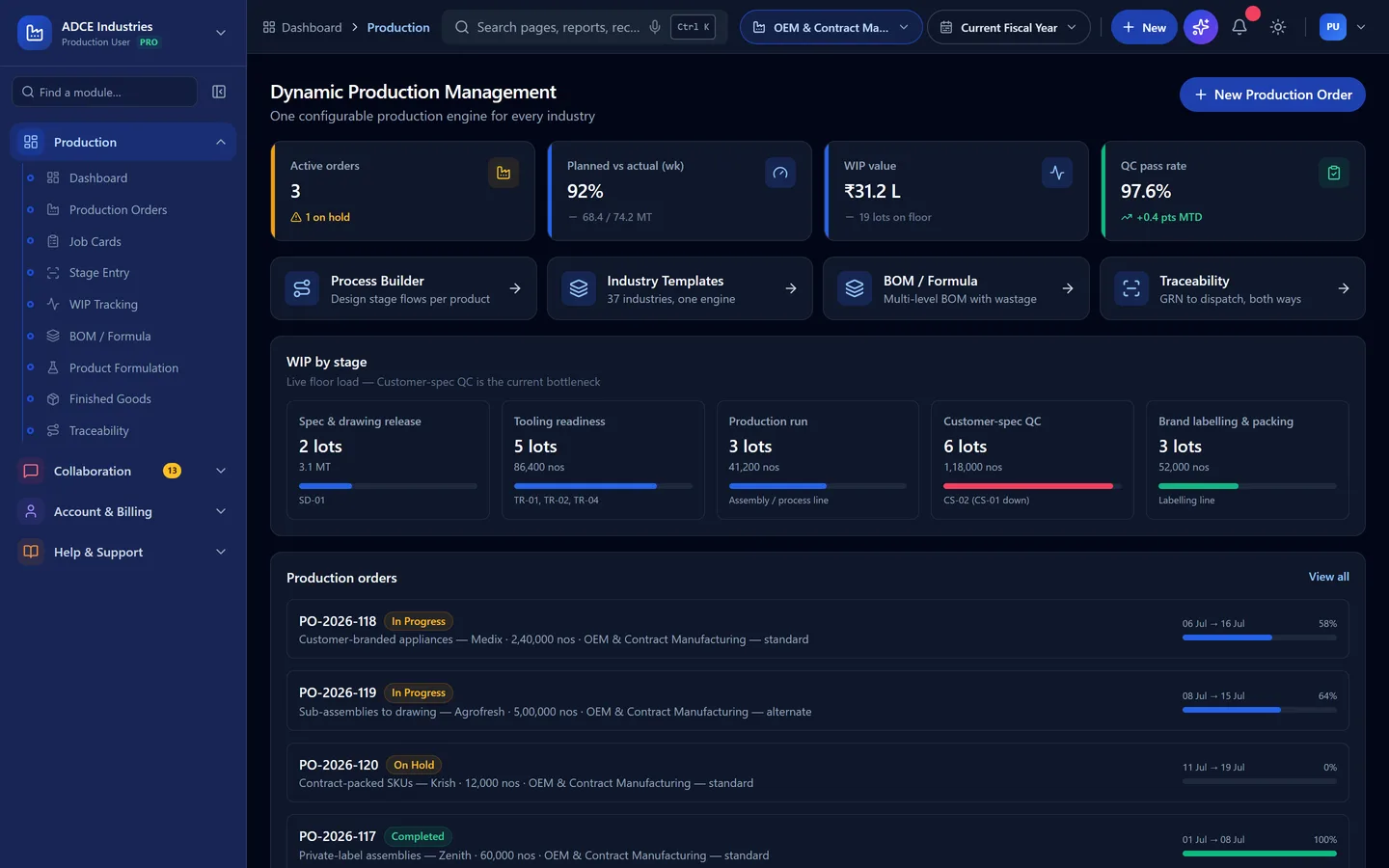
What goes in
Customer free-issue material, own consumables
What comes out
Finished goods under the customer brand
Customer-branded appliances · Private-label assemblies · Contract-packed SKUs · Sub-assemblies to drawing
Who is it for
Not all OEM & contract manufacturers work the same way.
The template is the same; what it has to answer for is not. Find the one that sounds like you — if none of them do, say so on the call and we will tell you honestly whether this is the right fit.
Contract manufacturers building to customer spec
Per-customer BOMs, drawings and revision control.
Private-label producers
The same line producing several brands, costed separately.
Units running customer-owned material
Free-issue stock never mixed with your own.
MANUPRIME AI
Ask it about this floor, in your own words.
The AI reads the same records this template creates — so on a OEM & contract manufacturer floor the questions it can actually answer are the ones you already ask at the morning meeting.
Questions it answers here
- “Why has customer aql pass moved this week?” — currently 98.2% in the demo data
- “Why has free-issue reconciliation moved this week?” — currently 99.7% in the demo data
- “Why has on-time to customer date moved this week?” — currently 94% in the demo data
- “Where is my wastage going?” — free-issue material loss, spec rejects, costed back to the batch that caused it
- “What am I short of in the next 14 days?” — with the covering purchase order drafted for approval
And what it is not allowed to do
It shows its working, or it does not answer
It drafts. A person releases
It sees only what the person asking can see
Quality
What quality control looks like here.
Checks that hold a dispatch, at the frequency this trade actually inspects.
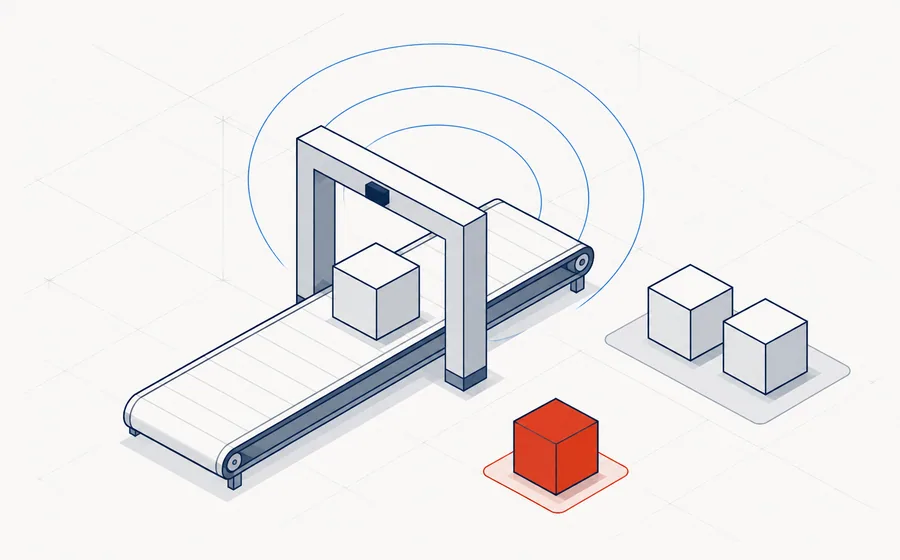
| Parameter | Method | Frequency |
|---|---|---|
| First article | Full dimensional and functional | Every run start |
| Customer AQL | Sampling per their plan | Every lot |
| Artwork & barcode | Scan verification | Every pack change |
| Free-issue reconciliation | Weight or count vs challan | Every challan |
Wastage and recovery
The part generic ERPs get wrong.
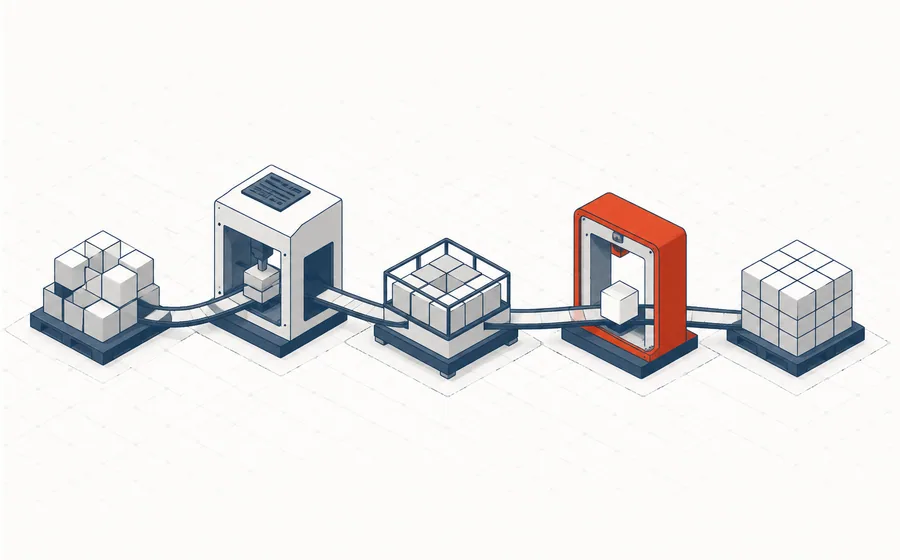
Most systems can only write material off. In this trade that is the difference between a costing you believe and one you argue with.
Rules that ship with this template
- Free-issue material loss reported to the customer against the challan, never absorbed quietly
- Spec rejects held for the customer decision — scrap, rework or concession
- Our consumables costed to the job; customer material is never valued as ours
What drives your cost per unit
- Conversion charge per unit, because the material may not be ours
- Tooling amortisation only where we own the tool
- Line-hour rate including changeover between customer brands
In short:Free-issue material loss, spec rejects.
Compliance
What this trade has to prove.
Configured, not bolted on afterwards — the records come out of the same transactions your floor is already entering.
On the dashboard
The numbers this plant is judged on.
Sample figures from the demo, so you can see the shape of what you would be looking at every morning.
- Customer AQL pass
- 98.2%
- Free-issue reconciliation
- 99.7%
- On-time to customer date
- 94%
Illustrative values from the demo dataset, not a customer's figures.
Questions
Questions we get asked first.
Can it keep customer free-issue material separate from ours?
It arrives on a challan, is held stock-separate, is never valued as ours, and is reconciled back against the challan on dispatch. Loss is reported to the customer rather than absorbed and hoped about.
Do we invoice conversion only?
Where the material is theirs, the sales document carries the conversion charge and the material reconciliation travels with it. Where the material is ours, the same job costs both ways without a second setup.
Can we run different customers with different quality plans on one line?
The control plan and the AQL are attributes of the customer order rather than of the line, so two brands can run the same shift with different inspection rules and different artwork revisions.
See it running with OEM & Contract Manufacturing data.
The demo opens with this trade's materials, machines, checks and reports already in place. No signup, nothing to install.