
Discrete / regulated
ERP for Medical Device Manufacturers
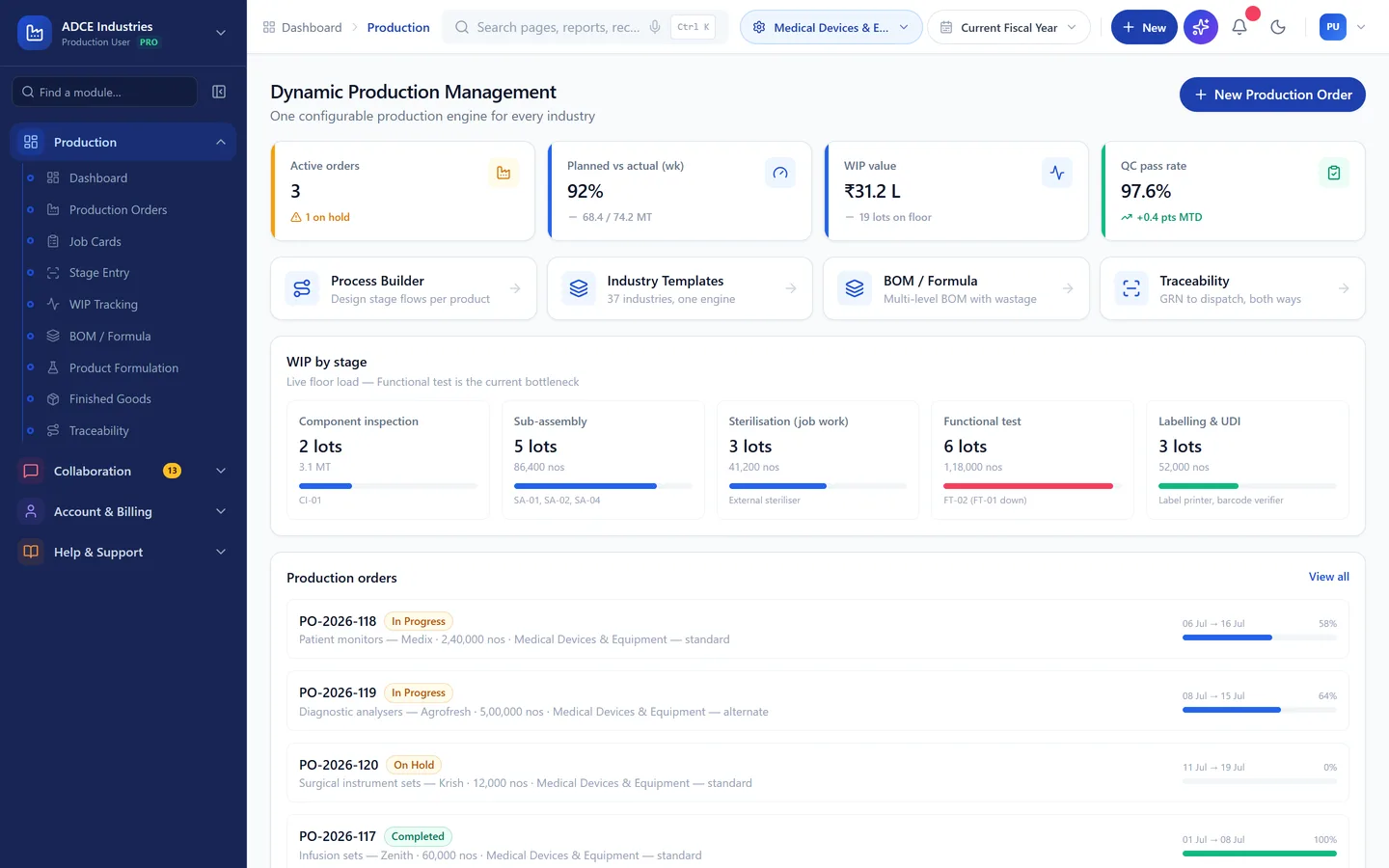
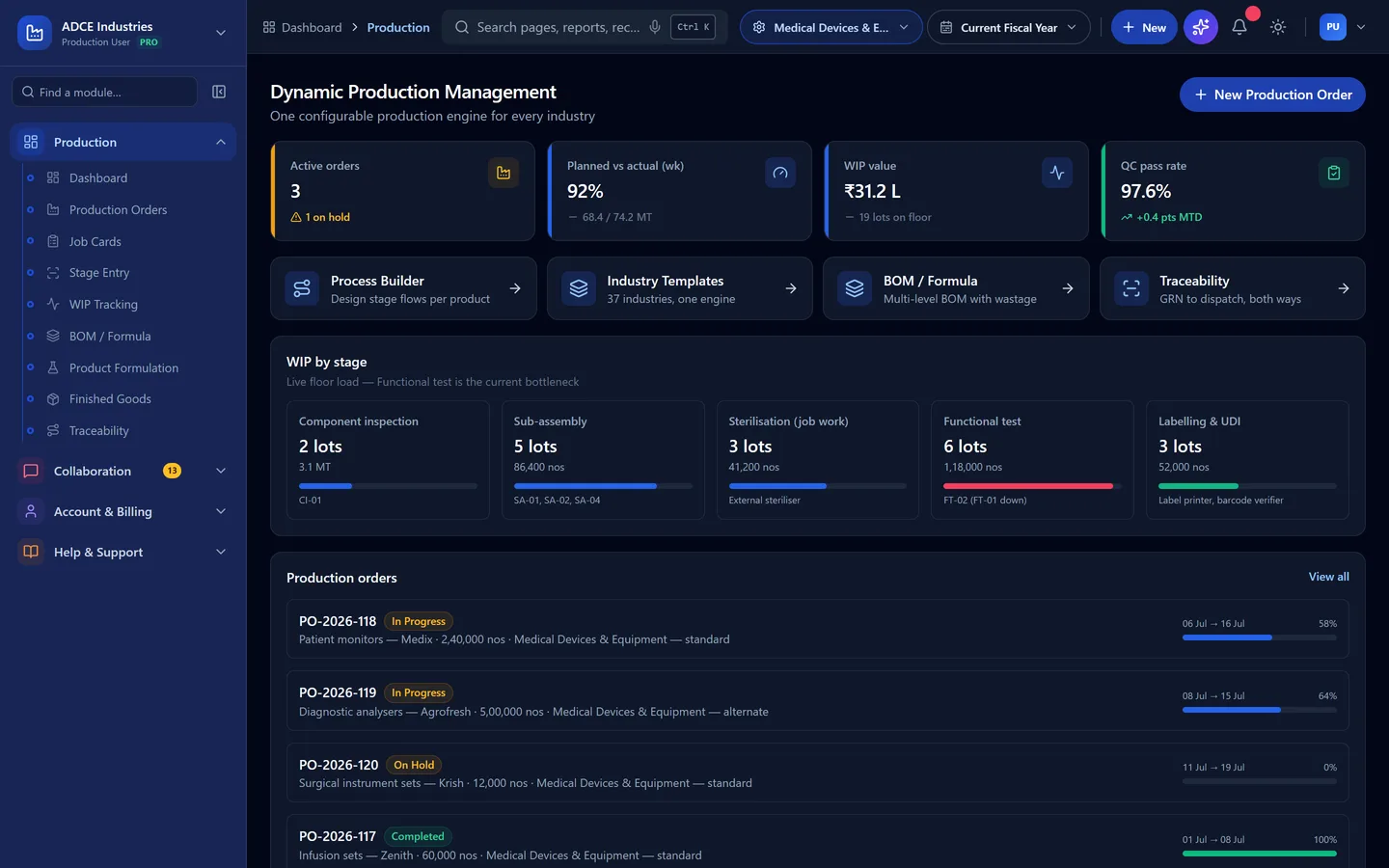
Everything is per serial — the test result, the sterilisation load, the complaint three years later. Software that tracks batches will do most of this and then fail on the one question a regulator asks: which units were in that load.
- Stages mapped
- 7
- Quality checks
- 4
- Wastage rules
- 3
- Compliance items
- 3
Your process
The stages, already mapped.
Clean-room assembly with UDI and device history records. These are the stages the template ships with — machines and checks included. Yours will differ in detail; that is configuration, not development.
- 1
Component inspection
Verify incoming components against the drawing and the supplier certificate
- Machines
- CMM, vision gauge
- Checked
- Dimensional AQL, certificate check
- 2
Sub-assembly
Build and test sub-assemblies before they enter the clean room
- Machines
- Assembly bench, torque drivers
- Checked
- Torque log, continuity
- 3
Clean-room assembly
Final assembly under controlled particulate conditions
- Machines
- ISO 8 clean room
- Checked
- Particle count, gowning log
- 4
Sterilisation (job work)
Send the load out for ETO or gamma and reconcile what comes back
- Machines
- External steriliser
- Checked
- Sterility certificate, load release
- 5
Functional test
Run the full functional protocol and record it against the serial number
- Machines
- Test rig, data logger
- Checked
- Protocol pass, calibration validity
- 6
Labelling & UDI
Apply the UDI, serial and expiry to the device and its pack
- Machines
- Label printer, barcode verifier
- Checked
- UDI scan verification
- 7
Packing
Pack with the instructions for use and close the device history record
- Machines
- Packing bench
- Checked
- DHR completeness
What goes in
Precision components, electronics, medical polymers
What comes out
Devices (serialised, UDI)
Patient monitors · Infusion sets · Surgical instrument sets · Diagnostic analysers
Who is it for
Not all medical device manufacturers work the same way.
The template is the same; what it has to answer for is not. Find the one that sounds like you — if none of them do, say so on the call and we will tell you honestly whether this is the right fit.
Medical device manufacturers
Design records, UDI-serialised units and complaint history.
Disposables & consumables units
Sterilisation lots, shelf life and batch recall.
Equipment assemblers and service units
Serialised machines with installation and service history.
MANUPRIME AI
Ask it about this floor, in your own words.
The AI reads the same records this template creates — so on a medical device manufacturer floor the questions it can actually answer are the ones you already ask at the morning meeting.
Questions it answers here
- “Why has first-pass functional yield moved this week?” — currently 97.4% in the demo data
- “Why has dhr completeness moved this week?” — currently 100% in the demo data
- “Why has sterilisation load rejects moved this week?” — currently 0.6% in the demo data
- “Where is my wastage going?” — assembly rejects, failed sterilisation loads, costed back to the batch that caused it
- “What am I short of in the next 14 days?” — with the covering purchase order drafted for approval
And what it is not allowed to do
It shows its working, or it does not answer
It drafts. A person releases
It sees only what the person asking can see
Quality
What quality control looks like here.
Checks that hold a dispatch, at the frequency this trade actually inspects.
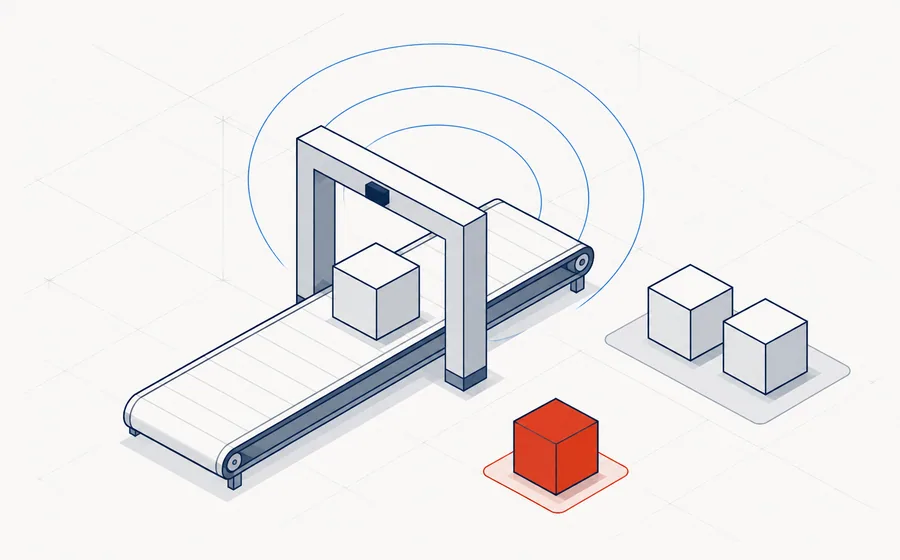
| Parameter | Method | Frequency |
|---|---|---|
| Functional protocol | Test rig with logged result | Every unit |
| Leak / pressure | Per device family | Every unit |
| Sterility | External lab certificate | Every load |
| Component dimensional | CMM sampling | Incoming AQL |
Wastage and recovery
The part generic ERPs get wrong.
Most systems can only write material off. In this trade that is the difference between a costing you believe and one you argue with.
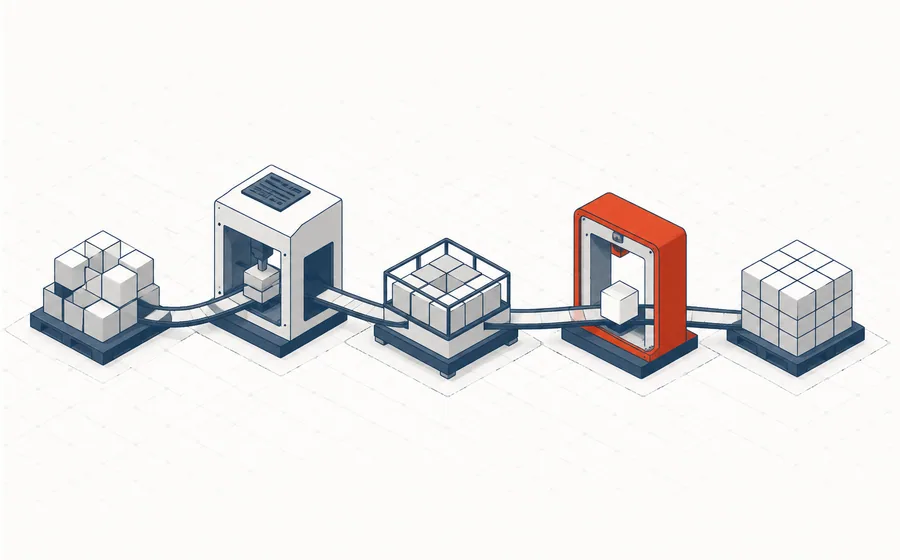
Rules that ship with this template
- Assembly rejects held for a rework decision, never scrapped at the bench
- A failed sterilisation load is re-sterilised once, then quarantined
- Serialised scrap written off against the serial, not the batch
What drives your cost per unit
- Component cost per serialised device
- Clean-room hour rate
- Sterilisation charge per load, apportioned per device
In short:Assembly rejects, failed sterilisation loads.
Compliance
What this trade has to prove.
Configured, not bolted on afterwards — the records come out of the same transactions your floor is already entering.
On the dashboard
The numbers this plant is judged on.
Sample figures from the demo, so you can see the shape of what you would be looking at every morning.
- First-pass functional yield
- 97.4%
- DHR completeness
- 100%
- Sterilisation load rejects
- 0.6%
Illustrative values from the demo dataset, not a customer's figures.
Questions
Questions we get asked first.
Can we trace one device back to its components and its sterilisation load?
Both directions. From a serial you get the components, the operator, the test record and the load it was sterilised in; from a load you get every serial that was in it. That is what makes a field action a list instead of a recall of everything.
Does it hold the device history record?
The DHR is built from the assembly and test entries against the serial, and packing is blocked until it is complete. It is retained for the life of the device rather than the life of the subscription.
We send sterilisation out. Does it handle that?
It leaves as job work on a challan against the load, the return is reconciled, and the sterility certificate has to be attached before the units can be released. The challan clock and the release gate are the same record.
See it running with Medical Devices & Equipment data.
The demo opens with this trade's materials, machines, checks and reports already in place. No signup, nothing to install.