
Process / challan-driven
ERP for Job Work & Subcontract Units
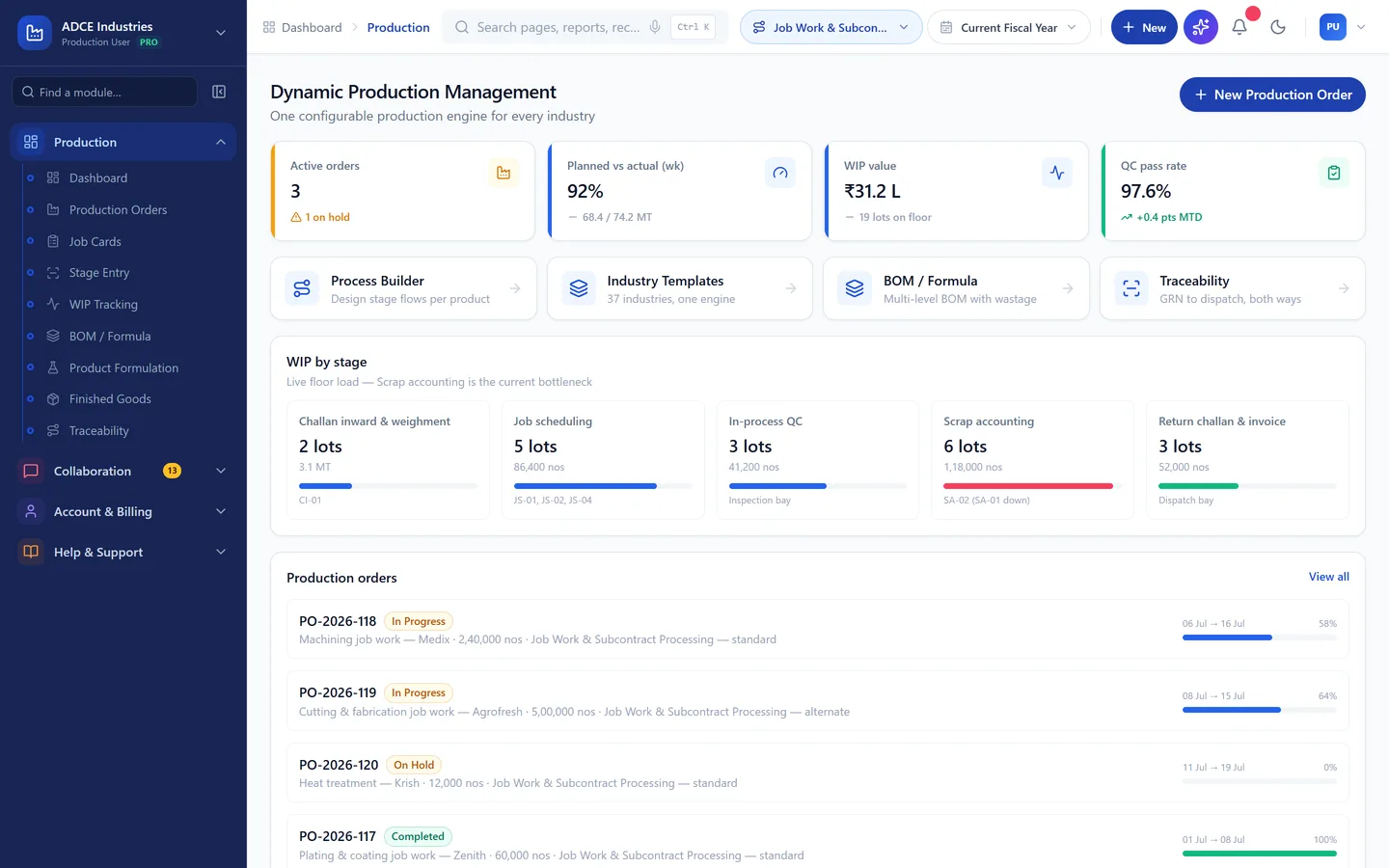
The material is not yours, the clock is not yours, and the tax consequence of missing the return date is backdated to the day it arrived. Most ERPs can track the work and not the challan.
- Stages mapped
- 6
- Quality checks
- 4
- Wastage rules
- 3
- Compliance items
- 3
Your process
The stages, already mapped.
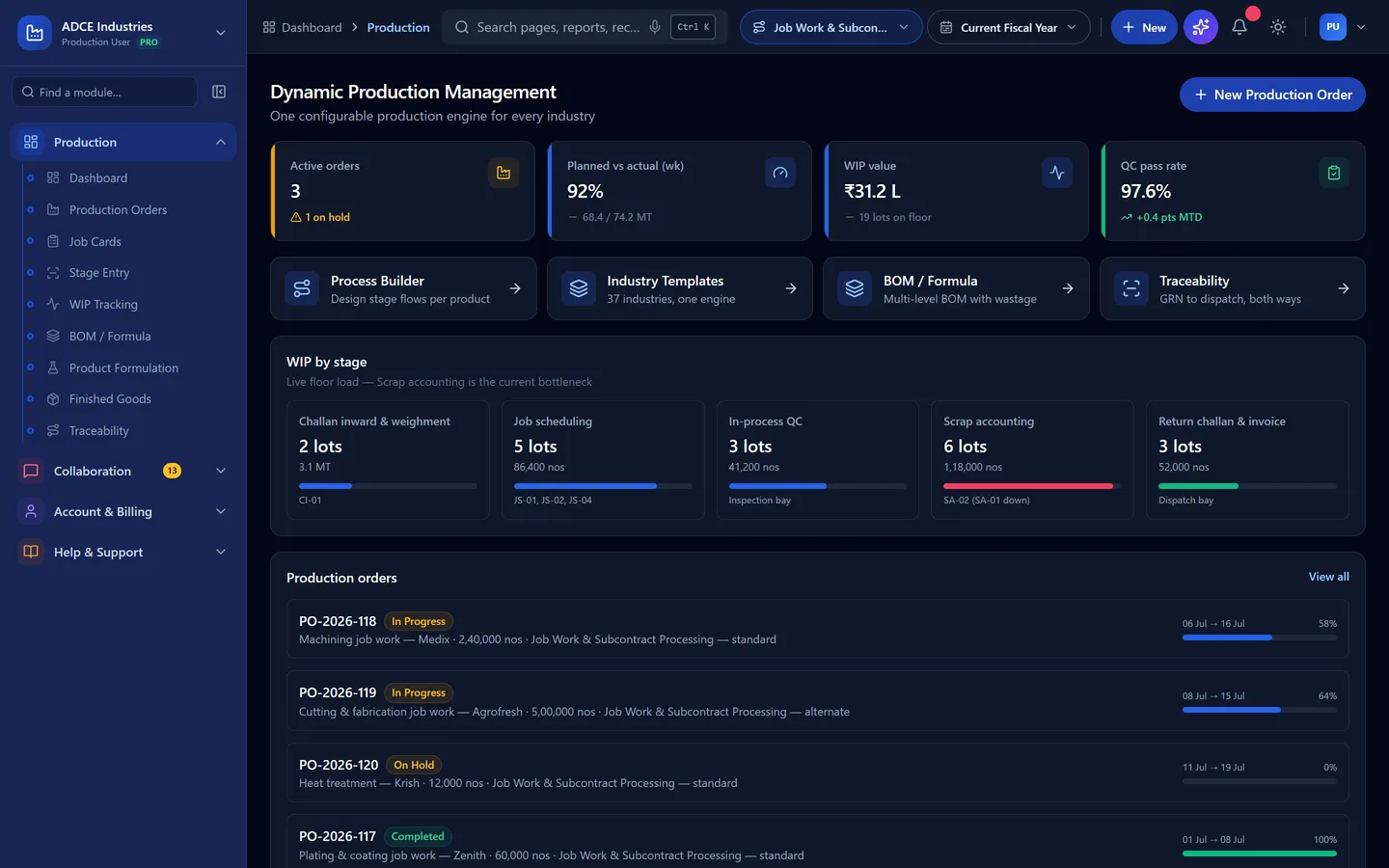
Processing somebody else’s material against a challan clock. These are the stages the template ships with — machines and checks included. Yours will differ in detail; that is configuration, not development.
- 1
Challan inward & weighment
Receive the principal material against a delivery challan and weigh it in
- Machines
- Weighbridge, platform scale
- Checked
- Weight vs challan, visual condition
- 2
Job scheduling
Schedule the lot against capacity and the return date the challan is running to
- Machines
- Planning board
- Checked
- Challan ageing, promised return date
- 3
Processing
Run the agreed operation on material that belongs to somebody else
- Machines
- Process machines
- Checked
- In-process dimensional and process log
- 4
In-process QC
Check conversion against the input-output norm agreed with the principal
- Machines
- Inspection bay
- Checked
- Yield vs norm, defect rate
- 5
Scrap accounting
Account the scrap generated and settle whether it returns or is retained
- Machines
- Scrap yard scale
- Checked
- Scrap weight vs norm
- 6
Return challan & invoice
Return the processed material on a challan and invoice the conversion only
- Machines
- Dispatch bay
- Checked
- Return weight tally, challan closure
What goes in
Principal’s material under delivery challan
What comes out
Processed material returned on challan
Machining job work · Plating & coating job work · Heat treatment · Cutting & fabrication job work
Who is it for
Not all job work & subcontract units work the same way.
The template is the same; what it has to answer for is not. Find the one that sounds like you — if none of them do, say so on the call and we will tell you honestly whether this is the right fit.
Job workers on customer material
Challan in, challan out, reconciled quantity and rate.
Process houses selling a stage, not a product
Costing per kilo, metre or piece processed.
Principals who send material out
What is lying with each job worker, and for how long.
MANUPRIME AI
Ask it about this floor, in your own words.
The AI reads the same records this template creates — so on a job work & subcontract unit floor the questions it can actually answer are the ones you already ask at the morning meeting.
Questions it answers here
- “Why has yield vs norm moved this week?” — currently 99.1% in the demo data
- “Why has challans past 270 days moved this week?” — currently 2 in the demo data
- “Why has on-time return moved this week?” — currently 95% in the demo data
- “Where is my wastage going?” — process loss vs norm, recoverable scrap, costed back to the batch that caused it
- “What am I short of in the next 14 days?” — with the covering purchase order drafted for approval
And what it is not allowed to do
It shows its working, or it does not answer
It drafts. A person releases
It sees only what the person asking can see
Quality
What quality control looks like here.
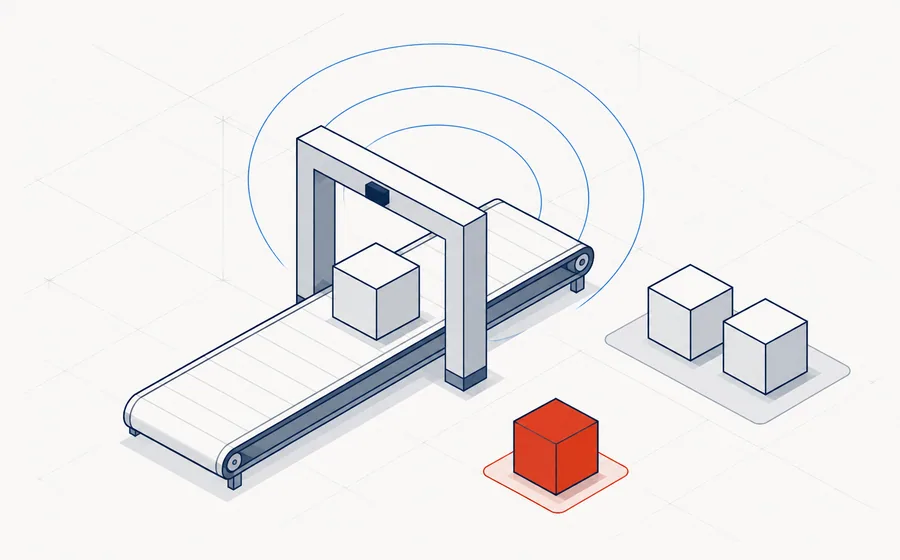
Checks that hold a dispatch, at the frequency this trade actually inspects.
| Parameter | Method | Frequency |
|---|---|---|
| Input weight | Weighbridge | Every challan |
| Conversion yield | Weight reconciliation vs norm | Every lot |
| Process parameter | Per operation specification | Every lot |
| Return tally | Weighbridge | Every return challan |
Wastage and recovery
The part generic ERPs get wrong.
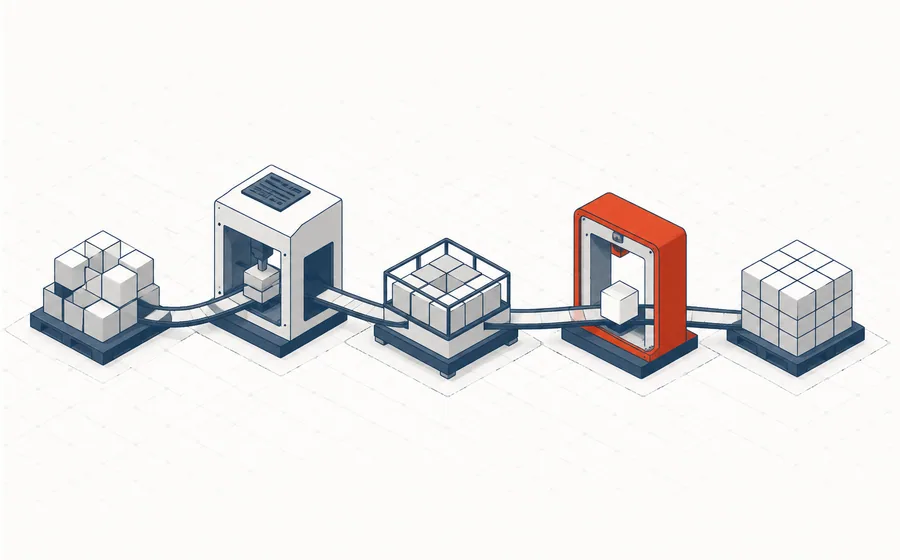
Most systems can only write material off. In this trade that is the difference between a costing you believe and one you argue with.
Rules that ship with this template
- Process loss allowed only up to the norm agreed with the principal, in writing
- Scrap retained at our premises only where the principal is registered and has agreed to it
- Rework passes counted separately — a lot processed twice has consumed capacity twice
What drives your cost per unit
- Conversion rate per kg or per piece, because the material is not ours
- Machine-hour rate against actual run time on the lot
- Consumables and power per lot, not per rupee of material
In short:Process loss vs norm, recoverable scrap.
Compliance
What this trade has to prove.
Configured, not bolted on afterwards — the records come out of the same transactions your floor is already entering.
On the dashboard
The numbers this plant is judged on.
Sample figures from the demo, so you can see the shape of what you would be looking at every morning.
- Yield vs norm
- 99.1%
- Challans past 270 days
- 2
- On-time return
- 95%
Illustrative values from the demo dataset, not a customer's figures.
Questions
Questions we get asked first.
Does it track challan-wise open balance and ageing?
Per challan, not as a monthly total. Quantity out, quantity returned, quantity still open and how many days it has been out — flagged well before the one-year input clock starts to matter.
Can it produce ITC-04?
It is populated from the same challan register the floor already works against, so filing is a review rather than a reconstruction. The frequency follows your turnover band.
How is the conversion norm handled?
The input-output norm sits on the process, so the expected return is computed instead of argued about afterwards. Scrap is a separate agreed line — retained or returned — and the gap against the norm is the number worth looking at.
See it running with Job Work & Subcontract Processing data.
The demo opens with this trade's materials, machines, checks and reports already in place. No signup, nothing to install.