
Continuous / daily cycle
ERP for Dairy Processors
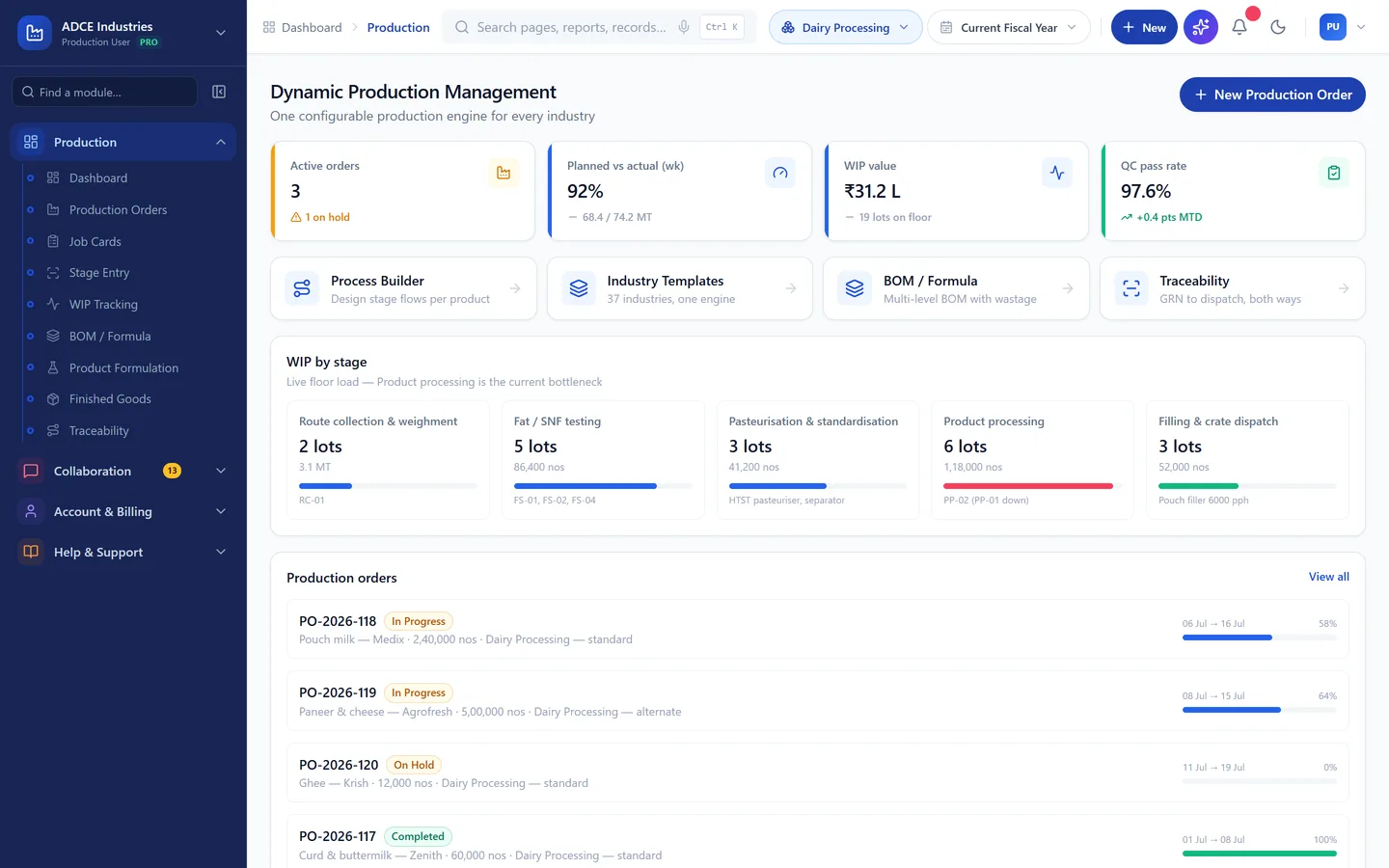
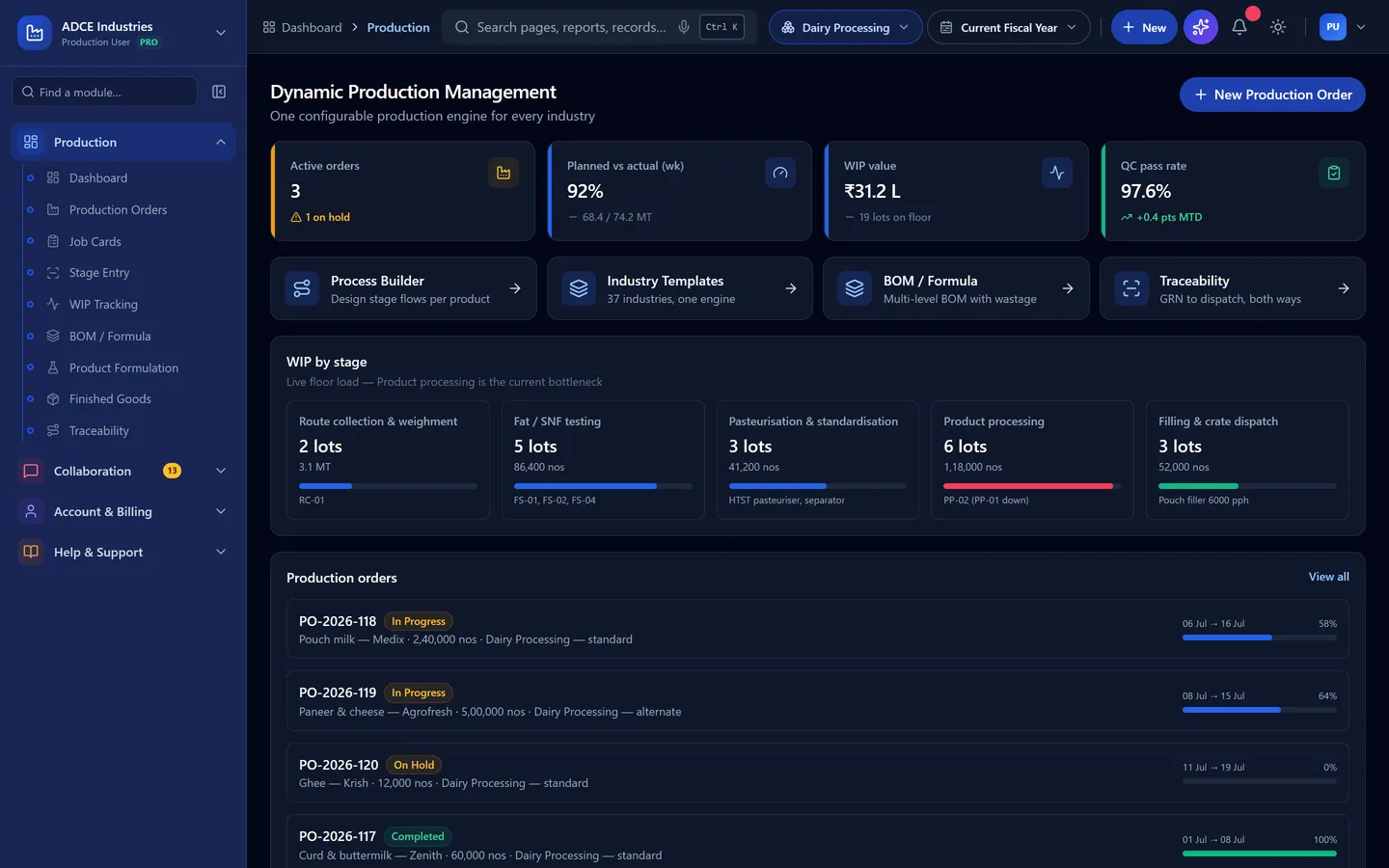
You buy on fat and SNF, sell in litres, turn the whole plant over twice a day, and yesterday evening a route came back short. An ERP built around a monthly close cannot keep up with a plant that reconciles before breakfast.
- Stages mapped
- 6
- Quality checks
- 4
- Wastage rules
- 3
- Compliance items
- 3
Your process
The stages, already mapped.
Route collection to packed SKUs on a twice-daily cycle. These are the stages the template ships with — machines and checks included. Yours will differ in detail; that is configuration, not development.
- 1
Route collection & weighment
Collect from society and route, weighed in at the dock against the advice
- Machines
- Weighbridge, can tipper
- Checked
- Route weight vs advice
- 2
Fat / SNF testing
Test every route sample and price the collection on fat and SNF
- Machines
- Milko-tester
- Checked
- Fat %, SNF %, adulteration
- 3
Chilling
Chill to 4°C inside the collection window
- Machines
- BMC 10 KL, plate chiller
- Checked
- Temperature log, MBRT
- 4
Pasteurisation & standardisation
Pasteurise and standardise to each SKU fat target
- Machines
- HTST pasteuriser, separator
- Checked
- Phosphatase negative, fat vs target
- 5
Product processing
Convert standardised milk into curd, ghee and paneer per the day plan
- Machines
- Curd incubation, ghee boiler
- Checked
- pH, moisture, acidity
- 6
Filling & crate dispatch
Fill, code and crate against route-wise dispatch before the morning run
- Machines
- Pouch filler 6000 pph
- Checked
- Pouch weight, seal, coding
What goes in
Raw milk by route, cultures, packaging film
What comes out
Pouch milk, curd, ghee, paneer
Pouch milk · Curd & buttermilk · Ghee · Paneer & cheese
Who is it for
Not all dairy processors work the same way.
The template is the same; what it has to answer for is not. Find the one that sounds like you — if none of them do, say so on the call and we will tell you honestly whether this is the right fit.
Milk processing & packing plants
Daily collection, fat/SNF-based pricing and route-wise dispatch.
Cheese, ghee & powder units
Conversion yields from a single raw input.
Co-operatives and collection networks
Society-wise procurement and farmer payments.
MANUPRIME AI
Ask it about this floor, in your own words.
The AI reads the same records this template creates — so on a dairy processor floor the questions it can actually answer are the ones you already ask at the morning meeting.
Questions it answers here
- “Why has collection vs plan moved this week?” — currently 96% in the demo data
- “Why has fat recovery moved this week?” — currently 98.4% in the demo data
- “Why has route return rate moved this week?” — currently 1.2% in the demo data
- “Where is my wastage going?” — handling loss, churn loss, market returns, costed back to the batch that caused it
- “What am I short of in the next 14 days?” — with the covering purchase order drafted for approval
And what it is not allowed to do
It shows its working, or it does not answer
It drafts. A person releases
It sees only what the person asking can see
Quality
What quality control looks like here.
Checks that hold a dispatch, at the frequency this trade actually inspects.
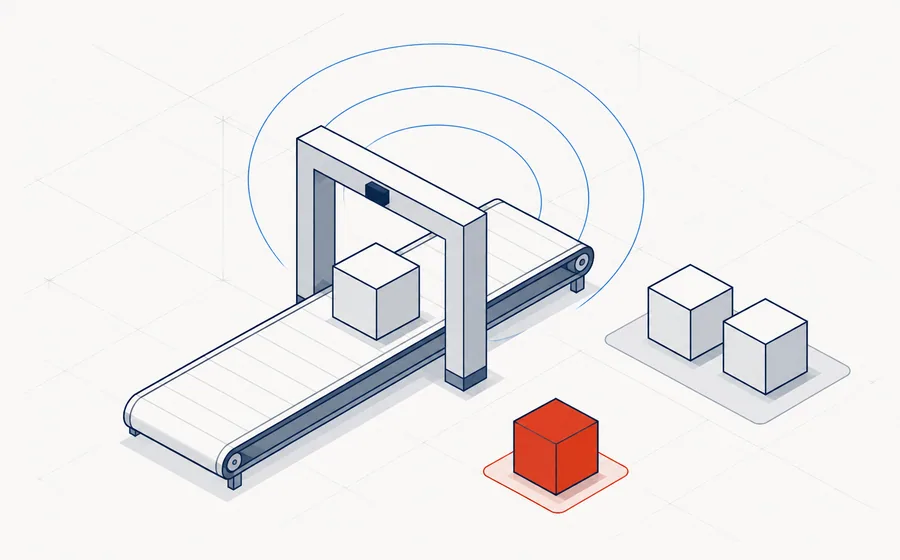
| Parameter | Method | Frequency |
|---|---|---|
| Fat & SNF | Milko-tester | Every route |
| MBRT | Dye reduction | Every tanker |
| Phosphatase | Enzyme test | Every pasteurisation batch |
| Acidity | Titration | Every product batch |
Wastage and recovery
The part generic ERPs get wrong.
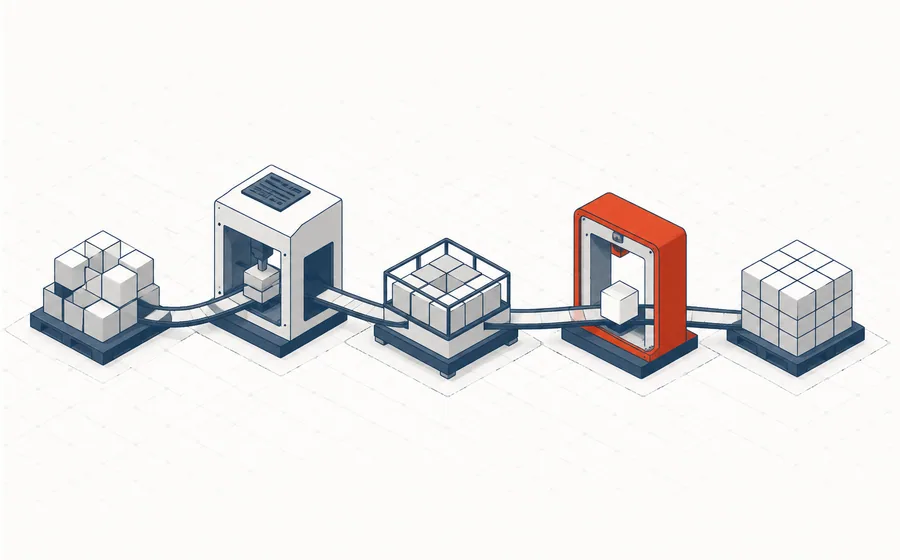
Most systems can only write material off. In this trade that is the difference between a costing you believe and one you argue with.
Rules that ship with this template
- Handling and transfer loss standard 0.8% of intake
- Churn loss booked to the ghee batch that caused it
- Market returns re-tested before reprocessing, never blended untested
What drives your cost per unit
- Milk cost per kg fat and kg SNF, not per litre
- Route transport cost per litre collected
- Chilling and steam cost per KL processed
In short:Handling loss, churn loss, market returns.
Compliance
What this trade has to prove.
Configured, not bolted on afterwards — the records come out of the same transactions your floor is already entering.
On the dashboard
The numbers this plant is judged on.
Sample figures from the demo, so you can see the shape of what you would be looking at every morning.
- Collection vs plan
- 96%
- Fat recovery
- 98.4%
- Route return rate
- 1.2%
Illustrative values from the demo dataset, not a customer's figures.
Questions
Questions we get asked first.
Does it price collection on fat and SNF rather than volume?
The route sample sets the rate, and the society or farmer payable is computed on kg fat and kg SNF. Volume is what moves; fat is what you paid for, and costing follows the fat.
Can it run two cycles a day?
The day model is shift-based rather than date-based, so morning and evening collection, processing and dispatch are separate cycles that close independently of each other.
What about market returns?
Returns come back against the route and the batch that went out, get re-tested before any decision, and are reprocessed or written off with a reason. Route-wise return rate is a KPI, because it is usually a distribution problem rather than a quality one.
See it running with Dairy Processing data.
The demo opens with this trade's materials, machines, checks and reports already in place. No signup, nothing to install.